EYE ONE : VIDNA OBMANA – NEAR THE FLOGGING LANDSCAPE (1990)
Short-lived US cassette label VIOLET GLASS ORACLE TAPES was a particular one but in its short run they released a very interesting and unique collection of albums. A bit more departed from the noisy and industrial vibe most labels had back then. REVEALED BY COMPOSED NATURE was just finished and sent off to the pressing plant when this album for VGO was recorded. Meanwhile learning more in depth about the KORG M1, VIDNA OBMANA refined his ambient sound. NEAR THE FLOGGING LANDSCAPE was perhaps the album wherein he showcased his affection and inspiration for Brian Eno’s 80s ambient music. The reviews spoke for themselves.
Factsheet Five: Marvelous electronic music embodying Brian Eno’s ambient aesthetic, the dense, subtle wash of sound can function either actively or passively, depending on your brainset. Not only are these aural passages composed of fascinating multi-layered textures, but the cumulative effect is not entirely unlike those positive environmental vibes so aggressively marketed by crappy new age synth-meisters. Excellent quality cassette.
Option: If you wondered why Brian Eno didn’t make a Music For Airports Vol. 2, wonder no longer. Our friend Vidna has devised eight pieces with very similar parameters: slow washes of synth chords, drifting piano, very ambient. What renders this fresh and vibrant is an occasional eastern harmonic or polyphony (12-tone, or what sounds like it) that has been worked into the fabric so that you might miss it had you not been listening to it.
Autumn is the perfect season to rediscover or get acquainted with this album. For the moment at ‘name your price’…. grab it and enjoy… (photo is the original cassette cover)
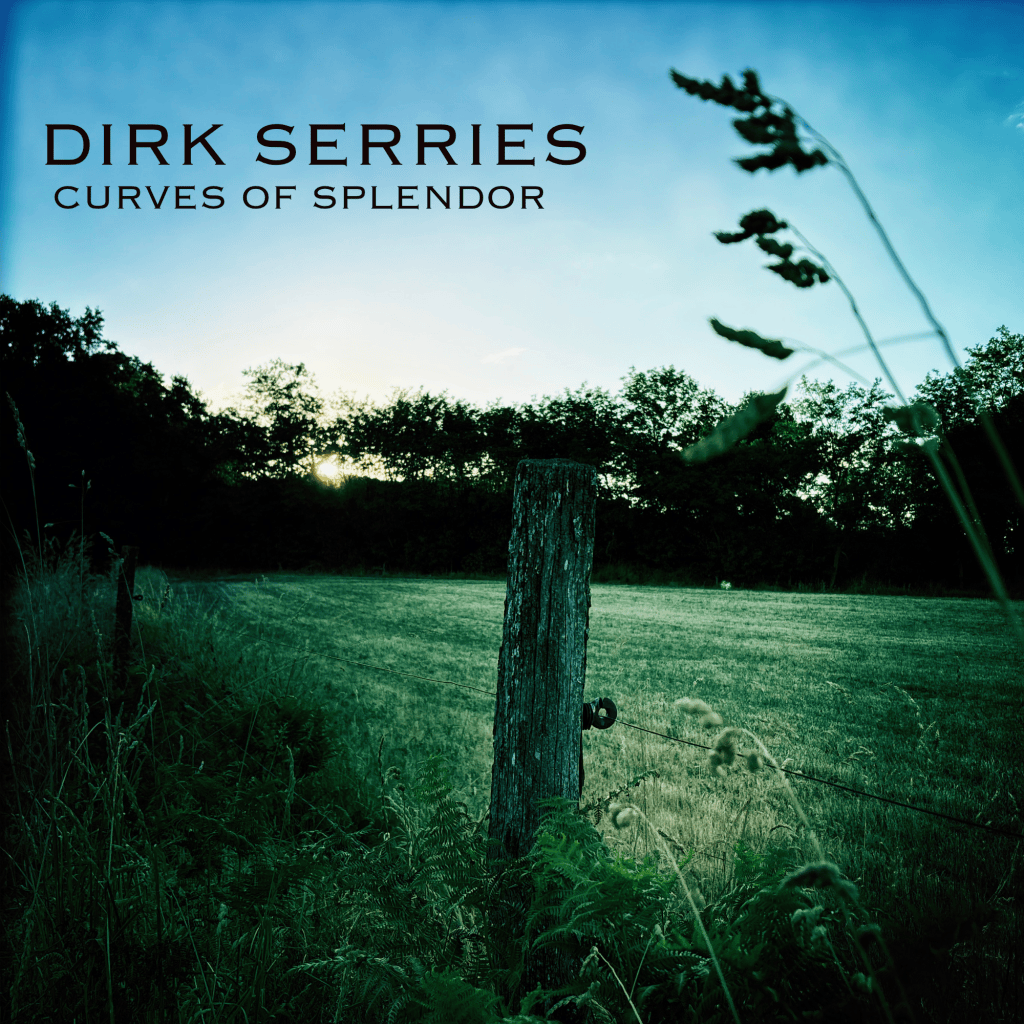
With an electric guitar and a handful of effects, Belgian Dirk Serries (acclaimed for the work under his alter ego vidnaObmana) sculpts four gleaming long-form ambient tracks which embrace splendor with an optimistic light. Four mantras, infused with brightness, warmth and calmness, venturing to another place, another time, another dimension.
From the melancholic opening track ‘Destination Rewind’ to the trance-inducing longform end piece ‘Oblivion Serenade’, the music embraces a gentle complexity. Curves of Splendor, Dirk’s 5th solo album for Projekt, sees the grandeur of his processed guitar harmonics move playfully across a minimalist tranquility drenched in hopeful moods. The multiple overlapping guitar tones and waves generate a flow that elevates and transports the listener to a place of comfort, away from the intrusive world we live in today.
“Curves of Splendor” sounds like the sort of title that might come with its own incense, a photograph of a mountain nobody has actually climbed and instructions to breathe deeply while pretending not to think about the electricity bill. Dirk Serries, fortunately, is too experienced a musician to reduce serenity to lifestyle decoration. On “Curves of Splendor”, his fifth solo release for Projekt, tranquillity is not presented as an escape hatch but as something constructed patiently, tone by tone, from the unstable physical properties of an electric guitar and a handful of effects.
Serries has spent more than four decades testing what a limited vocabulary can actually contain. Beginning in the experimental underground of the 1980s and developing the celebrated Vidna Obmana project into one of the better-known names in European ambient music, he eventually abandoned that moniker in 2007. His later work under his own name, including the “Streams of Consciousness” series, has increasingly concentrated on the guitar as a source of sustained harmonic movement. Rather than treating the instrument as a vehicle for riffs, solos or conventional melody, Serries uses it almost as a generating surface, allowing tones to overlap, reinforce one another and gradually acquire different emotional weights.
That approach is immediately apparent in “Destination Rewind”. The title implies movement backwards, but the music refuses anything so efficient as actual time travel. A low, melancholy resonance establishes itself and then seems to inspect its own surroundings. Additional tones appear without announcing themselves as events, subtly modifying the harmonic temperature. The piece does not progress by accumulating conventional musical information. Instead, its changes are perceptual: a tone that initially seems distant becomes suddenly intimate; a stable chord reveals a faint internal agitation; what appeared to be a background layer turns out to have been doing most of the emotional work all along.
There is considerable discipline in this apparent simplicity. Anyone can sustain a guitar note. Doing so for twelve minutes while keeping the listener aware of minute changes in colour is another matter. Serries understands that repetition becomes interesting when the ear is given a reason to keep checking whether anything has changed. The answer is usually yes, although sometimes the change is so slight that the listener feels almost complicit in discovering it.
“Slowly Wired” is more obviously concerned with the electrical character of the instrument. Its harmonics gather in overlapping strata, producing a sensation of motion without requiring a beat. The title is almost comically accurate: the guitar seems to be connected to some enormous circuit whose voltage has been turned down sufficiently for us to hear the wiring rather than the fireworks. Serries’ effects do not decorate the guitar from the outside. They alter its identity, allowing a recognisable instrument to become a collection of resonances whose origin remains just visible enough to keep the music tactile.
This is an important distinction in an era when ambient music can too easily become indistinguishable from a beautifully photographed productivity app. “Curves of Splendor” has warmth, but it does not confuse warmth with blandness. Its harmonic language contains small frictions and ambiguities, and the brighter passages retain enough density to avoid becoming sonic wallpaper. The optimism in the record is therefore more convincing because it has not been achieved by simply deleting every darker shade.
The twelve-minute “A Curve of Splendor” develops that idea with particular patience. Its layers seem to bend around one another rather than move toward a destination, creating a sensation of continuous curvature. There is no dramatic arrival because the point is not arrival. Serries is interested in what happens when a sound remains present long enough for its physical character to become perceptible. Harmonics shimmer, tones thicken and recede, and the boundaries between foreground and background become pleasantly unreliable.
This is where the album’s title starts to make more sense. The “curves” are not merely melodic or spatial. They describe the way the music changes without breaking its continuity. A chord can brighten without becoming a new chord; a drone can acquire tension without turning into a climax; a familiar interval can suddenly seem larger because the surrounding frequencies have shifted. Serries makes these almost microscopic adjustments carry the expressive burden normally assigned to melody, rhythm and dramatic structure.
Then comes “Oblivion Serenade”, occupying more than half an hour and effectively changing the scale of the entire album. Thirty-three minutes is enough time for the listener’s usual impatience to begin making administrative inquiries, but the piece has little interest in satisfying it. Instead, it establishes a broad field in which harmonic layers slowly alter their relationships. The effect is hypnotic without relying on the blunt repetition of a conventional loop. One begins listening less for “what happens next” and more for the exact character of what is already happening.
There is something almost old-fashioned about this kind of attention. Serries asks for the listener to stay with a sound rather than consume a sequence of developments. That makes “Curves of Splendor” surprisingly resistant to background listening, despite belonging to a genre that is frequently recruited for precisely that purpose. It can certainly accompany quiet activities, but its subtleties reward a more concentrated ear. The longer one remains inside the piece, the more its apparently uniform surface starts to reveal differences in density, pitch and resonance.
The album also makes an interesting companion to Serries’ earlier ambient history without functioning as a nostalgia exercise. His vidnaObmana work was strongly associated with synthesizers and elaborate electronic environments, whereas his contemporary ambient practice places the electric guitar at the centre of the process. The instrument gives the music a certain organic irregularity. Even when heavily processed, its harmonics retain traces of touch, pressure and physical vibration. The electronics do not erase the guitar’s body so much as stretch it beyond its usual proportions.
That may be why the record’s serenity never feels entirely weightless. Beneath the smooth surfaces there is always evidence of something being played, manipulated and listened to in real time. The music has patience because the musician has developed a remarkably detailed understanding of how little needs to be changed for a texture to become newly expressive.
“Curves of Splendor” is therefore less a collection of four ambient compositions than an extended study in controlled continuity. Its achievement lies in making duration itself expressive without turning slowness into a virtue merely because it is slowness. The four pieces occupy a narrow territory, but Serries knows that narrow territories can contain plenty of weather.
And perhaps that is the album’s most useful form of optimism. It does not promise transcendence, enlightenment or any of the other expensive nouns routinely attached to ambient music. It simply demonstrates that attention can still make small things seem substantial: one harmonic overtone, one change in density, one tone arriving slightly later than expected. In a culture that keeps mistaking acceleration for progress, Serries offers something almost radical by comparison: music that has nowhere urgent to be, and consequently has time to notice what is happening.
“Curves of Splendor” does not demand that the world disappear. It merely makes it quieter for a while, which, given the current state of the species, is already a fairly respectable achievement.
CABEZA DE MOOG! REVIEW : Otro gran aporte de LightbulbSun ahora presentando el último trabajo del belga Dirk Serries, un tipo del que habíamos hablado por sus colaboraciones con Steven Wilson. Todo muy Ambient, muy tranqui. En “Curves of Splendor”, su quinto álbum solista, la grandeza de los armónicos de guitarra procesados de Dirk se desplaza con soltura sobre una calma minimalista, bañada por un halo de esperanza. Hablamos de un disco que no busca entretener con estribillos ni sacudirte con amalgamas rítmicas; es una obra inmersiva, pensada exclusivamente para quienes entienden el silencio como un instrumento más y el sonido como una materia escultórica. Acá vas a encontrar drone guitarrístico, resonancias, microtonalidad espacial, introspección absoluta, ingravidez y refugio mental… Arquitecto incansable del sonido ambiental, el drone minimalista y la abstracción en la guitarra, ese es el belga Dirk Serries. “Curves Of Splendor” lo encuentra en un estado de gracia compositiva absoluta, despojando a la guitarra eléctrica de cualquier pretensión melódica tradicional para transformarla en una fuente inagotable de texturas orquestales, resonancias y paisajes flotantes. Armado con una guitarra eléctrica y un puñado de efectos, el belga Dirk Serries esculpe cuatro temas largos de puro Ambient, una sonoridad resplandeciente en oda de mantras impregnados de calidez y serenidad. Desde el melancólico tema inicial, “Destination Rewind”, hasta la pieza final de larga duración que induce al trance, “Oblivion Serenade”, la música destila sutilezas. La superposición de múltiples tonos y oleadas de guitarra genera un flujo que eleva y transporta al oyente a un refugio de bienestar, lejos del mundo intrusivo en el que vivimos hoy. Escuchar este disco es como quedar suspendido en el vacío cósmico o flotar en una pileta de agua tibia con los ojos vendados, mientras el tiempo exterior se detiene por completo. Transmite una calma inmensa, una ingravidez melancólica y un refugio introspectivo tan poderoso que resulta casi terapéutico. No te pide nada a cambio; te exige paciencia y te recompensa disipando cualquier rastro de ansiedad. Ojo, para mí es demasiado, no soporto escucharlo por mucho tiempo, así que ojo al piojo y antes que nada escuchalo y fijate si esto es lo tuyo. “Curves Of Splendor” se consagra como una pieza de orfebrería ambiental indispensable para los devotos del minimalismo contemporáneo y la vanguardia instrumental de este año. Para cuando la noche caiga por completo, el clima pida cero decibeles de pirotecnia y quieras regalarte a la audiencia un viaje absoluto hacia la quietud mental.
SALT PEANUTS REVIEW :
Belgian experimental guitarist Dirk Serries is known for the work under his ambient music-tinged alter ego vidnaObmana, as well as his work with YODOK III, Kodian Trio, and many other free improvised meetings, mostly documented on his own label. A New Wave of Jazz. Curves of Splendor returns to his long-form ambient textures.
Serries is equipped only with electric guitar and effects to sketch subtle, slow waves of processed and looped guitar harmonics, but uses the studio to sculpt and layer expansive and highly resonant ambient architectures that radiate an optimistic, warm and bright light. These four extended pieces – four meditative mantras – sound as if informed by Serries’ recent move to the pastoral landscapes of Bourgogne-Franche-Comté in France, as if venturing to another place triggers a new perspective on time and adds another dimension to the music.
The album begins with the subtle, quiet, and minimalist melancholia of the «Destination Rewind» and «Slowly Wired» that sound as if distilling the sensibility of frozen time and weightless space to its essential skeletal dimensions, and slowly developing their ever-growing emotional impact. «A Curve of Splendor» introduces an optimistic thread, gently embracing the bright lights, and this feeling intensifies with the 33-minute hypnotic «Oblivion Serenade» that concludes this deeply immersive sonic journey. Curves of Splendor’s organic flow and its expansive, embracing sonic presence promise a comforting haven. It offers a radical alternative to the intrusive world we live in today, away from its restless, senseless scroll on bland screens, and its attention-sucking, corrupt, war-mongering leaders.
LUMINOUS DASH REVIEW : Wie dacht dat Dirk Serries sinds hij naar het platteland in Frankrijk is gaan wonen met zijn vrouw Martina Verhoeven het wat rustiger aan zou doen inzake het maken van muziek en het bijhorende uitbrengen van een resem albums, heeft het bij het verkeerde eind. Serries blijft namelijk net zo ijverig musiceren als toen hij nog in ons apenland resideerde. Met zijn elektrische gitaar een een stel effecten creëert hij vier lange nummers die tegen ambient aan schurken. Het zijn zich traag ontwikkelende stukken die ietwat sacraal aan doen en mistige, ijle en desolate landschappen oproepen. De sfeer is ietwat melancholisch maar tegelijk warm en rustgevend met een licht sprankeltje hoop loerend vanachter het hoekje. Het album is als een soort van herfstige meditatie, een mijmering op den buiten over de kleine dingen des levens. Het zijn wondermooie stukken muziek al is het maar de vraag of we ze binnen een half jaar nog zouden kunnen toewijzen tot dit album of we gewoon niet meer weten bij welk Serries-album ze behoren. Dat is uiteraard het nadeel als uitermate actief muzikant waarbij veel opnames nogal in dezelfde lijn liggen. Carves Of Splendor is inmiddels al het vijfde album dat Serries maakte voor het Amerikaanse Project-label. Dat specialiseert zich in ambient, etherische klanken, elektronica en darkwave en als we even een korte blik werpen op hun zeer uitgebreide catalogus zit Serries daar in zeer goed gezelschap. Het fijne van deze release, en er staan nog enkele te ontdekken platen op de bandcamppagina van het label, is dat ze als ‘name your price’ te downloaden zijn. Dat betekent dat niemand een excuus heeft om deze spiksplinternieuwe Serries eens een luisterbeurt te geven. Beklagen zal de luisteraar het zich zeker niet. Een mooie kennismaking voor wie zijn werk nog niet kent en voor wie het wel kent, een interessante aanvulling.
While we are celebrating the release of VIDNA OBMANA’s final TWILIGHT OF PERCEPTION REDUX chapter, here’s another eye on !
VIDNA OBMANA – CROSSING THE TRAIL (1998)
“It wasn’t easy to record the follow-up to the well-received THE RIVER OF APPEARANCE. While I somehow knew that people would love another album in a similar vein, I felt I could never surpass the feeling I achieved on RIVER so took a turn and decided to record an album that definitely incorporated some of the melancholy but induced with a more rhythmical and experimental approach. Blessed with guest contributions by Steve Roach, Martina Verhoeven and Jeff Pearce, I was able to create an album that stood its grond after the expectation RIVER has caused and still very proud of CROSSING THE TRAIL which accentuated another side of VIDNA OBMANA and its realm I’ve been creating”.
For a limited time I’m offering this remastered ZOHARUM edition digital as ‘name your price’ and its CD version at a bargain of 5 EUR.
Perhaps the time now to combine this one with TWILIGHT OF PERCEPTION REDUX 4 !! Thank you !!!
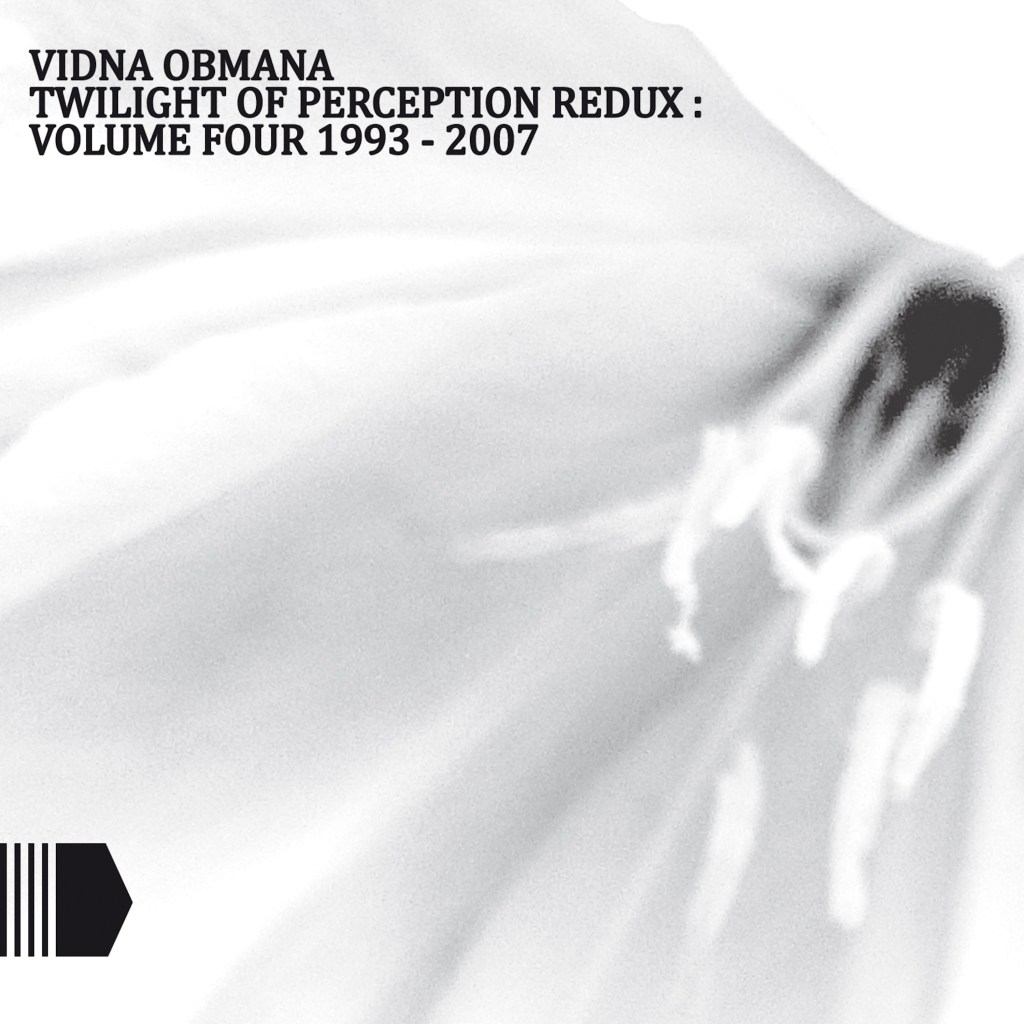
OUT NOW : VIDNA OBMANA – TWILIGHT OF PERCEPTION REDUX FOUR 1993-2007 (3XCD, ZOHARUM)
Proudly present the last chapter in the TWILIGHT anthology, unreleased and previously released pieces by VIDNA OBMANA , fully remastered, scattered over 3 discs, housed in an high-panel digipack with new photography by Martina Verhoeven.
To celebrate this final chapter, here’s a discount of 15% available for a limited time. Use code : twilight4 when completing your order.
OCTOBER 2nd IS BANDCAMP FRIDAY ! As you know on this day bandcamp generously waive their fees to support independent musicians, bands and labels across the globe. This means that when you buy on this particular Friday no fees will be deducted from your purchase to us.
As you can imagine this extra will help us to continue, record new music and maintain the system to do this all.
But without your support this doesn’t work so for us a moment to send back our gratitude and offer you some interesting discounts on the music we share.
Definitely check out the VIDNA OBMANA merch page as we’re getting low on stock of several titles… grab your copy now at this bandcamp Friday discount.
For any physical anddigital purchase you’ll be able to use a discount of 55%.
AMBIENT LANDSCAPES REVIEW : New glitch, fuzz & distortion from Dirk Serries and Phillip B. Klingler . . .
“Amplitude Split is a potent immersion into caustic, shape‑shifting ambient noise, where Dirk Serries’ guitar work and Phillip B. Klingler’s electronics & synths fuse into a single, unstable organism.
The core experience is its shifting sound structure: textures don’t simply evolve—they erode, fracture, and reform in unpredictable ways. Serries’ guitar often appears as a grainy, dissolving signal, stretched into metallic drones or scraped into brittle harmonic residue. Klingler counters with circuitry that feels volatile and alive, pushing synth tones toward distortion, corrosion, and near‑industrial abrasion.
What makes the album compelling is its experimental nature within a caustic, ambient framework. Instead of leaning on static drones or familiar dark‑ambient tropes, the duo embraces instability. Sounds buckle under pressure, frequencies clash, and the mix feels like a living system within a cycle of constant mutation.”
FELT THAT REVIEWS REVIEW : “New outing of collaborators: Phillip B. Klingler aka PBK and Dirk Serries released beautifully by Soundfume, a French independent label in a form of limited series lathe cut. Four tracks with high end contents of clean cut shapes of both ambience and drone noise. I always ask myself – how much you can explore in this terrain of obscurity even though you have had such a long and fruitful span of music making as both Phillip and Dirk have. Surely there are some times when some sort of stagnant energy takes toll. But when I have approached this album – it made me feel discovering something fresh and something that just doesn’t pass into this void where things are forgotten. It’s good to approach life with childlike curiosity – things get better and better in time when we do it. 30-35 years ago, being a teenager who could just envision things which were impossible – I discovered that there are people out there who actually create musical forms and shapes from similar standpoint and the output just gets better and better. So it is here, on this humble album that once again proves maturity of the musicians and equally mature vision of Epicurean music framework.”
KRAUTNICK REVIEW : 30 Jahre später gibt’s einen ganzen Stapel (also zwei) Updates: Die beiden Soundtüftler Dirk Serries aus Belgien bei Frankreich und Phillip B. Klingler aus dem Land zwischen Kanada und Mexiko tun sich für eine neue Veröffentlichung zusammen, ersterer anders als damals nicht unter seinem Alias Vidna Obmana, dafür zweiterer unter seinem Pseudonym PBK. „Amplitude Split“ heißt das neue gemeinsame Album, bestehend – kurz gefasst – aus dekonstruiertem Ambient. Für das Album reaktivierte Serries sein altes Label Soundfume und setzt mit von seiner Gattin Martina Verhoeven individuell gestalteten LP-Covern die Idee der früheren limitierten Tape-Releases fort. Für diese Zusammenarbeit setzt sich jeder der beiden Beteiligten zu Hause mit seinem technischen Brimborium hin und wandte es an. Im Falle von Serries bedeutete dies, so kennt man es von ihm, Gitarren mit Effektgeräten zum Drauftreten, im Falle von Klingler elektronische Klangerzeuger und Synthesizer. Zusammen generieren sie Ambient, ja – aber keinen Cozy-Ambient, der einen einkuschelt. Bereits die A-Seite verdeutlicht, dass es hier eher ungemütlich zugeht. Ein Pulsieren liegt unter dem dunklen Titelstück, irgendwie dunkel, und darüber Sounds, die nach einer Orgel klingen; wenn man Serries verfolgt, weiß man, dass er dazu in der Lage ist, solche Töne mit der Gitarre zu erzeugen, und obwohl am anderen Ende der Leitung ein Mann mit Synthies sitzt, lässt die Erfahrung diesen Rückschluss zu. Knarzige Geräusche wie einer alten Wachswalze entnommen durchkreuzen jeden Anflug von Kuscheligkeit. Es klingt, als lägen die eingesetzten Sounds auf zwei weit voneinander entfernten Ebenen. Ebenso verhält es sich mit „Two Particle Scattering“, in dem annähernd als schön aufzufassende Loops ungeklärter Herkunft ein technisches Zwitschern als Begleitung bekommen, das die entspannende Stimmung beeinträchtigt. Ein defektes Gerät, das irgendwie schleift, vielleicht die Bremsbacken an den Belegen, scheint hier zu knirschen. Auf der B-Seite nähern sich die beiden Ebenen an, in „Electrid Topology Resonance“ mäandern auf Augenhöhe reichlich unbequeme Sounds, leicht schräg, nebeneinander, übereinander, zögerlich. Rückwärtseffekte setzen ein, das Dunkle setzt sich fort. Zuletzt erschafft „A Threshold Theory“ eine kratzige, nur fragmentarisch melodiöse Soundlandschaft, nur leicht im Hintergrund, denn darüber bewegen sich latent kreischige Effekte. Zwar sind diese Ebenen wieder etwas voneinander entkoppelt, aber doch nicht so weit entfernt wie die auf der A-Seite. Mit der Reaktivierung seines Labels Soundfume betreibt Serries Erinnerungskultur, lässt er im Begleitschreiben wissen: Vor der Digitalisierung kursierten exklusive Alben gern als Tapes, also wahrhaftig im Untergrund, und dieser Veröffentlichungsart bedienten sich damals auch Serries alias Vidna Obmana und PBK, erstmals 1989 mit „Compositions: Depression & Ideal“ und „Monument Of Empty Colours“, letztmalig 1991 mit „Fragments 3“. Diese Exklusivität erzeugen die beiden nun dadurch, dass sie „Amplitude Split“ auf ausschließlich 25 handgepressten Vinylplatten herausbringen, zu denen Martina Verhoeven 25 exklusive Cover gestaltete. Ist ja auch wertiger als das Medium Tape, das ja seinerseits seit einigen Jahren wieder boomt.
TODAY IS BANDCAMP FRIDAY ! As you know on this day bandcamp generously waive their fees to support independent musicians, bands and labels across the globe. This means that when you buy on this particular Friday no fees will be deducted from your purchase to us.
As you can imagine this extra will help us to continue, record new music and maintain the system to do this all. But without your support this doesn’t work so for us a moment to send back our gratitude and offer you some interesting discounts on the music we share.
For any physical and digital purchase you’ll be able to use a discount of 50%. Use the code : bcsep26 on these platforms :
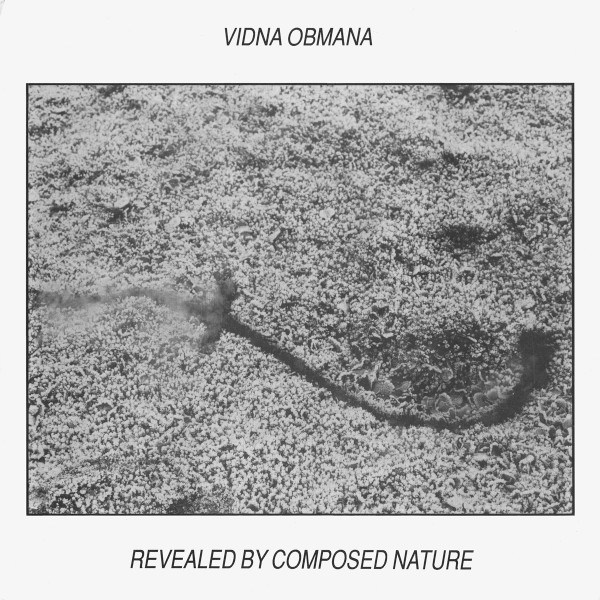
EYE ON : VIDNA OBMANA – REVEALED BY COMPOSED NATURE (1990)
We missed out on its 25th anniversary last year but 26 years will do fine. This album was VIDNA’s first vinyl record, after a series of ambient works on cassette. REVEALED was still recorded on a porta 4 track cassette recorder and two synths (Korg MS20 and M1). While the audio world was slowly rapidly moving into the digital domain, we didn’t access to any digital recorded so thanks to Mark Burghgraeve (Somnambulist, etc.) who kindly enough mastered the album and put it on DAT (digital audio tape) for the pressing plant. The pressing wasn’t flawless (we didn’t know better back then) but the LP was received well and became one of the favorite VIDNA OBMANA albums among listeners. Even beyond our knowledge was picked up by GODFLESH’s key members Justin K. Broadrick and Ben Green. Only to find out 15 years or so later when Justin K. Broadrick was so kind to remix his favorite tune ‘Out From The Garden Reminded’ as JESU & FINAL for the Chasing The Odyssee anthology vinyl box-set. Amazing how music travels. Alio Die’s reissued the album in an expanded version on his own Hic Sunt Leones in 1993 and its original version, fully remastered with new photography by Martina Verhoeven, on Zoharum 5 years ago.
Grab your digital copy now (for the time being) at ‘name your price’ or secure a physical copy at only 5 EUR (plus postage)
(photo of its original LP cover, artwork is by Cel Crabeels).
VIDNA OBMANA. – SOUNDTRACK FOR THE AQUARIUM (1993)
In 1992, while VIDNA OBMANA occasionally was part of Antwerp’s ritual band HYBRYDS, founder/leader SANDY NYS initiated a project to create a soundtrack for the Antwerp ZOO‘s aquarium, for the celebration of the 150th anniversary of the ZOO of Antwerpen. The idea was to recording two soundtracks (one by each VIDNA OBMANA and HYBRYDS), using the water draining and dolphin sounds, recorded at location. VIDNA OBMANA used the sounds unedited but just applied fade in and outs, and looped particular segments. No sampler was used. The Antwerp ZOO released a compilation from both soundtracks to sell at their booths. Later on the separate soundtracks were released. In 2001 American label HYPNOS released a two disc set, which included a live rendition. A fully remastered reissue was released on Polish ZOHARUM in 2019 as part of the reissue series of the most essential VIDNA OBMANA albums.
Grab your digital copy now (for the time being) at ‘name your price’ or secure a physical copy at only 5 EUR (plus postage).
(photo is the cover of the original compilation release by the Antwerp Zoo itself)
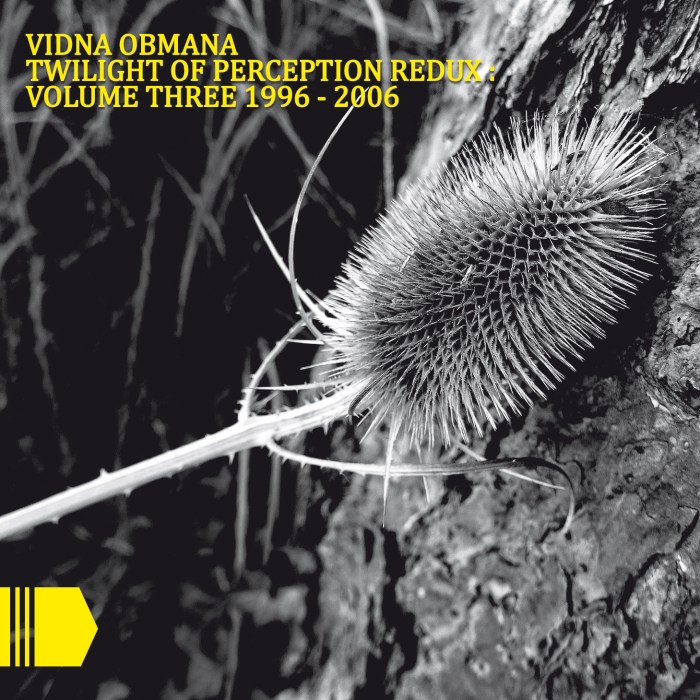
Polish label ZOHARUM just released the third installment in VIDNA OBMANA’s TWILIGHT OF PERCEPTION REDUX VOLUME THREE with music dating between 1996 and 2006 on a triple cd.
For Italy’s SO WHAT critic CESARE BUTTABONI wrote a truly lovely review on this release. It’s in Italian but easily translated in google, if you’re interested.
The 3CD anthology is available here :
SO WHAT REVIEW : In un’epoca in cui la musica ambient rischia spesso di diventare un genere di sfondo, Third Instalment di Vidna Obmana emerge come un compendio che non si limita a documentare, ma riscrive — per chi ascolta con attenzione — la mappa profonda di un universo sonoro in continua espansione. Raccolti, ordinati e rimasterizzati da Dirk Serries, i tre CD che compongono questa terza parte sistematizzano registrazioni dal 1996 al 2006: frammenti scavati da cassette rare, tracce dimenticate su formati ormai introvabili e momenti sparsi in antologie diverse, ora riuniti in un unico flusso sonoro che pulsa come un organismo levigato dal tempo. Questa raccolta è al tempo stesso testimonianza e paesaggio — un territorio dove drone, minimalismo e ambient si intrecciano in modi che vanno ben oltre la semplice atmosfera di sottofondo. Le tessiture si dispiegano come ecosistemi sotterranei; i droni profondi non si limitano a ‘suonare’: respirano e si insinuano nello spazio attorno, trascinando l’ascoltatore in un cosmo stratificato di memorie acustiche e tensioni sottili. Ogni pezzo qui contenuto è un frammento di tempo dilatato, un momento catturato tra quiete e movimento, restituendo uno spettro di emozioni che va dal crepuscolare al trascendentale. Non si può parlare di questo archivio senza riconoscere l’importanza di Vidna Obmana nella storia dell’ambient contemporanea. Nome d’arte di Dirk Serries, Vidna Obmana è stato una figura centrale nel plasmare l’evoluzione del genere, in particolare negli anni ’90 e oltre, con composizioni che hanno saputo espandere i confini del drone, dell’ambient e della musica atmosferica in generale. Il progetto ha influenzato non solo l’estetica stessa del drone ambient, ma anche collaborato con figure chiave della scena, tra cui Steve Roach — con cui ha realizzato opere che vengono ancora considerate fondamentali nel corpus ambient internazionale — e molti altri pionieri del suono meditativo e oscuro. Questa terza parte funziona quindi su più livelli: come archivio storico, come esperienza immersiva e come ponte tra passato e futuro. La rimasterizzazione di tracce che altrimenti sarebbero perdute consente di percepire con chiarezza quanto l’arte di Vidna Obmana fosse già allora un punto di convergenza tra minimalismo, atmosfera e cosmica introspezione — un punto di vista unico che ha influenzato generazioni di artisti ambient successivi. Il digipack a otto pannelli, arricchito da una grafica meditativa, trasforma l’edizione fisica in oggetto contemplativo: non solo un contenitore, ma un artefatto che stimola l’esplorazione, come se ogni pannello fosse una porta verso un nuovo spazio di suono e silenzio. Third Instalment non è semplicemente un archivio di rarità: è un cosmo sonoro densamente stratificato, un invito a riscoprire una voce cardine dell’ambient che ha saputo guardare oltre l’orizzonte del genere e, trent’anni dopo, rimane essenziale per chi cerca nell’ambiente sonoro qualcosa di più di un semplice paesaggio passivo — ma piuttosto una profonda esperienza di percezione e memoria.
LOOP REVIEW : Vidna Obmana es uno de los proyectos fundamentales del músico belga Dirk Serries, cuya trayectoria experimental se remonta a 1984. A lo largo de su carrera, Serries ha colaborado en diversas agrupaciones; actualmente destaca su labor en Fear Falls Burning (su serie de paisajes sonoros en vivo), Microphonics, Loud As Giants (junto a Justin K. Broadrick) y Continuum (con Steven Wilson). Su obra transita por géneros como el post-industrial, ambient, música étnica, drone minimalismo, jazz de vanguardia e improvisación. «Vidna Obmana» es un término serbio/croata que significa «ilusionismo óptico». Dirk Serries lo eligió por su capacidad para evocar imágenes y proyectar un carácter cinematográfico a través de la música, logrando transportar al oyente hacia un espacio de profunda reflexión y contemplación.La vasta y prolífica obra de Vidna Obmana transita por diversos paisajes sonoros, desde el post-industrial hasta el jazz de vanguardia. Al integrar géneros y subgéneros esenciales de la música experimental de las últimas cuatro décadas, se consolida como una figura icónica e imprescindible del underground global. A principios de los 90, mi puerta de entrada a nuevos mundos sonoros fue la revista italiana Sonora, donde descubrí a visionarios como Alio Die, Etant Donnés y Randy Grief. Fue entonces cuando el nombre de Vidna Obmana apareció por primera vez en mi radar, aunque su universo no terminaría de revelarse ante mí hasta tiempo después, gracias a una reveladora entrevista a Dirk Serries en la publicación británica Music From the Empty Quarter. Durante años, condicionado por sus apariciones en diversos recopilatorios, tendí a asociarlo con la estética de proyectos como Hybrids, O Yuki Conjugate o Rapoon; sin embargo, su música conservó ese aura de enigma personal que solo logré descifrar por completo hace apenas unos años. “Twilight Of Perception Redux Vol. Three” es una tercera colección de tracks inéditos, rarezas y canciones ya editadas que han sido recopiladas, arregladas y remasterizadas por Dirk Serries, los tres CD que componen esta tercera entrega incluyen grabaciones de 1996 a 2006. Los otros dos volúmenes son «Twilight Of Perception Redux – Volume Two 1995-2002» y «Twilight Of Perception Redux – Volume One 1990-1998», estas tres ediciones fueron publicadas por el sello polaco Zoharum en abril y julio de 2025 y en octubre de 2024, respectivamente. “Twilight Of Perception Redux Vol. Three 1996 – 2006” de estética minimalista crea un ambiente propicio para un viaje que navega entre el ethno-ambient, el ambient electrónico y los infinitos drones. Varios de los temas habitan la estratósfera como nubes de algodón suspendidas, integrándose en un entorno ambiental realzado por etéreas voces aladas. En contraste, piezas como ‘Majestic Trip’, ‘System Heartbeat’ y ‘Travelworld’ incorporan una percusión de matices étnicos que dota al conjunto de un ritmo ancestral y profundo.Los 18 tracks de “Twilight… 1996 – 2006” contenidos en un conjunto de 3 CD’s, es un documento sonoro que se convierte en el legado de Vidna Obmana; cuya música se remonta a más de 35 años atrás, continua tan vigente por su gran calado y profundidad.
MUSIQUE MACHINE REVIEW : 4 out of 5 rating ! Here’s the third volume in the Twilight Of Perception series. Each three-CD set in this series serves up a selection of rare and unreleased tracks from between the mid 1990’s and early 2000’s by Euro ambient pioneer Vidna Obmana, aka Dirk Serries. The set features eighteen tracks in all, with a good variation in both the tone and atmosphere, moving from lulling n’drifting ambience, all the way through upbeat / rhythmic-edged ethnic ambient works. The three-CD set is presented in an eight-panel digipak. It features an effective mix of yellow texts- underlaid by close-up monochrome photos of dried & barren plant life. As with the growing catalogue of Vidna Obmana reissues on the label, we get a nicely moody/ lightly arty and uniform look to the packaging. With six tracks on each disc. The first disc opens with “Majestic Trip”, which blends stabbing synth tones and electro ethnic rhythms with a forlorn/ yet semi-hopeful ambient tone glide. As we move through disc one, we have the hall-of-mirrors like/reverberating drones of “Intersection” which suggests some rather uneasy/ maybe creepy extraterrestrial vibes just at the edges of the track. Moving on to the second disc, we have “Totems” which is all about fading in ebbing & flowing warm ambience- feeling very much like the audio equivalent of sitting on a golden sand & blue water shore, letting the water slowly wash over you. On “Threshold Of Obstruction” we find a knocking ‘n’ combing beat underfed by steadily revolving and glowing ambient tones. With “Siren Awakes” we find a far-off whistle ‘n’ wail being steadily woven into circling drone warmth. Finally, on disc number three, we move from “Euphoric Bliss” with its blend of gentle chiming/ ringing tones and woozy yet bright ambient glow. Again, I’m getting a rather extraterrestrial vibe here- but this time it’s non-threatening, I’m thinking the feel of slowly being raised into the warming & soothing light of a UFO’s beam. Onto the steadily circling & wavering flow of “Shadow Blanket” where the tones/ pitches have both a pleasingly harmonic yet slightly warped quality about them.Twilight Of Perception Redux, Vol. Three is up to the high standard of the other releases in this series. And if you count yourself as even a vague fan of the ambient genre, this is a must, as all the tracks are so well-crafted & brilliantly conceived examples of the form.
DARKROOM REVIEW : Il periodo coperto in questa raccolta – 19962006 – è forse il più fertile e mutevole nella traiettoria di Dirk Serries. Anni in cui il progetto si espande, si contamina, attraversa territori diversi senza mai perdere quella tensione profonda verso l’interiorità. Qui però non troviamo i lavori “canonici”, ma frammenti: registrazioni rare, tracce uscite su compilation introvabili, editi minori, e soprattutto materiale in gran parte inedito. Come se si aprisse una seconda mappa, parallela, più nascosta. Eppure, ascoltato nella sua interezza, questo triplo CD non dà mai l’impressione di essere una raccolta discontinua. Al contrario: c’è una coerenza sotterranea che tiene tutto insieme. È il suono stesso di Vidna Obmana, quella miscela di droni profondi, riverberi vastissimi e movimenti lentissimi che trasformano ogni traccia in uno spazio abitabile. Qui il tempo si dilata. Le composizioni non cercano mai un centro, ma si espandono ai margini, come nebbia. Alcuni brani sono quasi immobili, altri introducono leggere increspature, pulsazioni appena percettibili, ma tutto resta sospeso in una dimensione che non ha urgenza. È musica che non chiede attenzione immediata, ma presenza. La cosa più affascinante è proprio questa: trattandosi di materiale sparso, ci si aspetterebbe una certa eterogeneità. Invece emerge una continuità quasi biologica, come se ogni traccia fosse una variazione dello stesso respiro. I passaggi più oscuri si alternano a momenti più luminosi, ma sempre filtrati da quella qualità contemplativa che definisce il progetto. La rimasterizzazione gioca un ruolo fondamentale. Non tanto per “modernizzare” il suono, quanto per renderlo più profondo, più leggibile nelle sue stratificazioni. I dettagli emergono lentamente, come forme nella nebbia, e l’ascolto diventa progressivamente più immersivo. Anche il contesto fisico dell’edizione – i tre CD, il digipack esteso, il commento di Dirk Serries – contribuisce a dare senso all’operazione.
ONLYDEATHISREAL REVIEW : Zoharum continues their forays into the vast archives of Belgian ambient project Vidna Obmana to unearth more rarities and unreleased tracks. The third installment in the series, like the two before it, consists of three CD’s and a total of over three hours of material. Out of the 18 tracks on the three discs, 13 are entirely unreleased hitherto. Dirk Serries, the man behind Vidna Obmana, laid the project to rest in 2007. This means that Zoharum’s series is starting to reach the end. But, considering there has been some temporal overlap between releases – part one covered the years 1990-1998, part two 1995-2002 – I suppose there might a fourth installment in the future. Like on the two first installments, Twilight Of Perception Redux: Volume Three consists of predominantly long tracks. The shorter ones are around six-seven minutes, whilst the longest tracks clock in at 15-20 minutes. For the most part, these mix pleasantly in the running order, so that a longer track will be preceeded and followed by a shorter track. However, as before, this is not about individual tracks. Even though this is a compilation of material recorded over a ten year period, this is to be listened to as a whole. If not all three discs in succession, which is a time-consuming task, then at least a disc in its entirety. Individual tracks will not stand out. Sadly, like on the second volume, there are sometimes lengthy silent sections after some tracks, which negatively disrupt the listening experience. Musically, Vidna Obmana remains Vidna Obmana. The long compositions consist of slowly modulating, evolving and moving layers of calm, harmonious synthesizer. Unlike the second installment of this series, percussion and rhythmic loops have an essentially non-existent role here. Only a few tracks such as Travelworld on the second disc have percussive elements in a core role. To me, personally, this makes the third installment preferable to the second. I don’t mind a bit of rhythm in my ambient, but most of the time, the less there is of it, the better. Especially in ambient of Vidna Obmana’s style, which is all about harmony, serenity, peace and calm. The slow, undulating layers of synthesizer lull the listener into a dreamy, hazy state of mind. Percussion only intrudes here. In a nutshell, the third installment of the Twilight Of Perception series is very akin to the two first in essentially all ways. Like them, though consisting of unreleased material instead of “greatest hits” – an absurd concept for ambient, wouldn’t you agree? – this is a great way to get to know the Belgian project. There is material aplenty to dig into here, and the quality remains high. If I were to rank the three installments so far, I’d say the first is the best, this comes in a close second, and the second installment lands third. However, if you dig into one, you might as well check all parts out. The prospect of sitting through what currently is a ten hour body of work might seem daunting and, to the uninitiated ambient listener, even pointless, is anything but. These are beautiful compilations, well suited for both background listening when engaging in various activities, as well as music to aid with meditation or other activities demanding concentration.
SIDE-LINE MAGAZINE REVIEW : Although Dirk Serries may have retired the Vidna Obmana moniker years ago, albums continue to be released under the name. While these are usually reissues or live recordings, this particular series is generating significant interest. The third installment in the “Twilight Of Perception Redux” series compiles rare and previously unreleased recordings from the Belgian project’s archives, spanning the years 1996 to 2006. The three CDs contain a total of 18 tracks, no fewer than 13 of which fall into the category of—let’s call them—‘curiosities’. Each disc features six tracks that immediately draw the listener into Vidna Obmana’s unique world. These are long, elaborate compositions characterized by generally slow, tribal rhythms that merge with deep, astral, and dreamlike soundscapes. Dirk Serries’ universe evokes a sense of mystery—and at times, a certain darkness—accentuated by field recordings and various forms of sound manipulation. At times, you feel as though you are wandering through a labyrinth of crystalline sounds; moments later, you are drawn towards an imaginary black hole, only to undergo an almost abyssal experience on the next track. Occasionally, a guitar emerges, played in an Ambient style that adds a touch of diversity to the overall atmosphere. Vidna Obmana was a project that fused different styles into a unique whole—a universe where Tribal and Ambient music formed a symbiotic relationship, sweeping the listener away into an imaginative world of richness, even on the darker tracks. This album is a perfect addition to the Vidna Obmana discography for many enthusiasts. Even decades after their creation, these tracks retain an irresistible allure—like a forbidden space where you simply have to discover what is unfolding inside. (Rating:8).