‘Twelve Tone’ one of the tracks from TOM MALMENDIER & DIRK SERRIES’ well-received ‘VANGUARD’ duo album is featured on Ambient Landscape’s IONIC mixcloud. Listen to it here. The album is still available here and here.
Listen back to this lovely interview with COLIN WEBSTER on Pattern Dissection. Here he talks about his recent and excellent solo LP (out now on RAW TONK RECORDS), Brexit, touring and the forthcoming KODIAN TRIO live album on OEM Records.
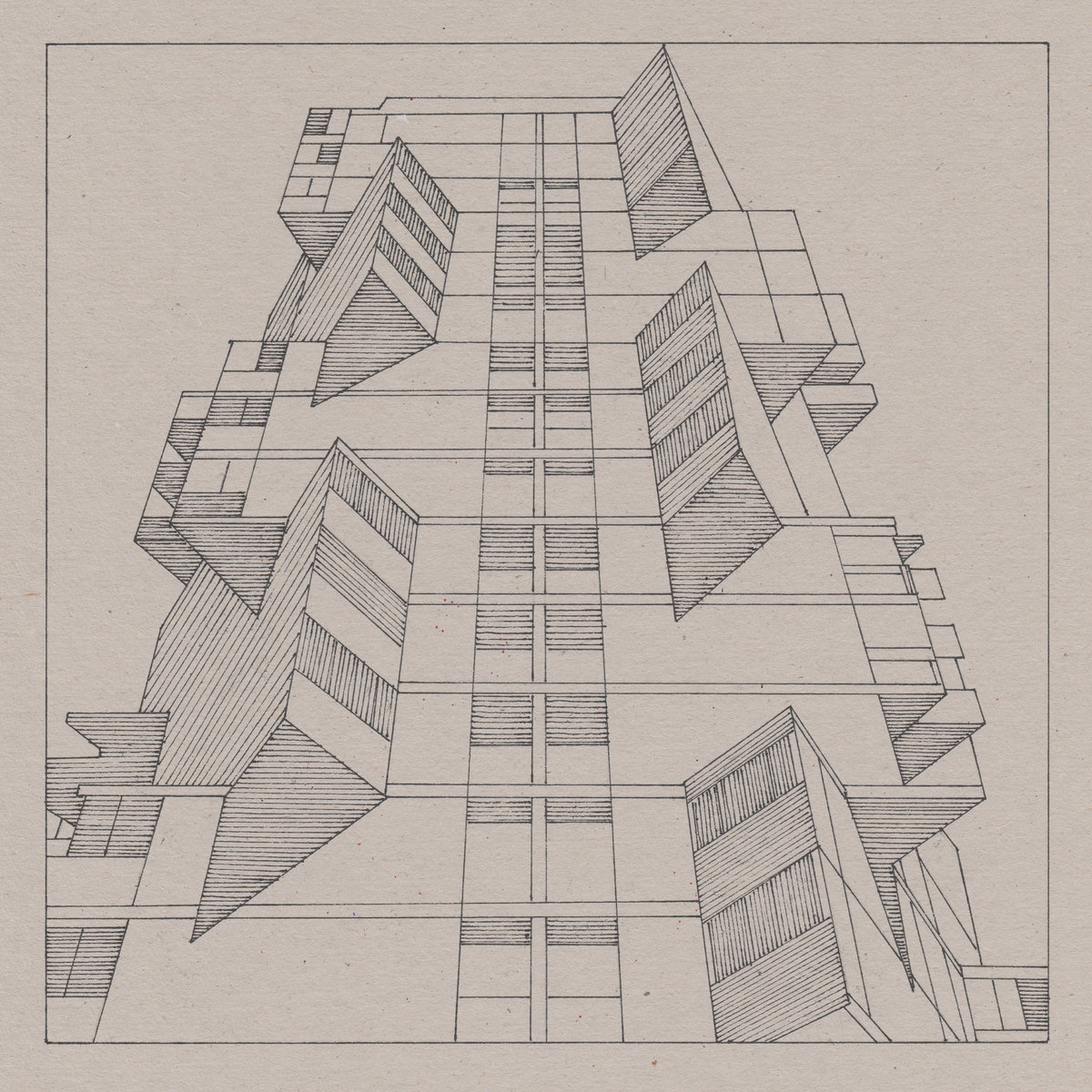
Venlo’s MAJJEM radioshow played a piece from each of our new vinyl releases : DIRK SERRIES – SOLO ACOUSTIC GUITAR IMPROVISATIONS I and GONCALO ALMEIDA – MONOLOGOS A DOIS. Listen to the show here.
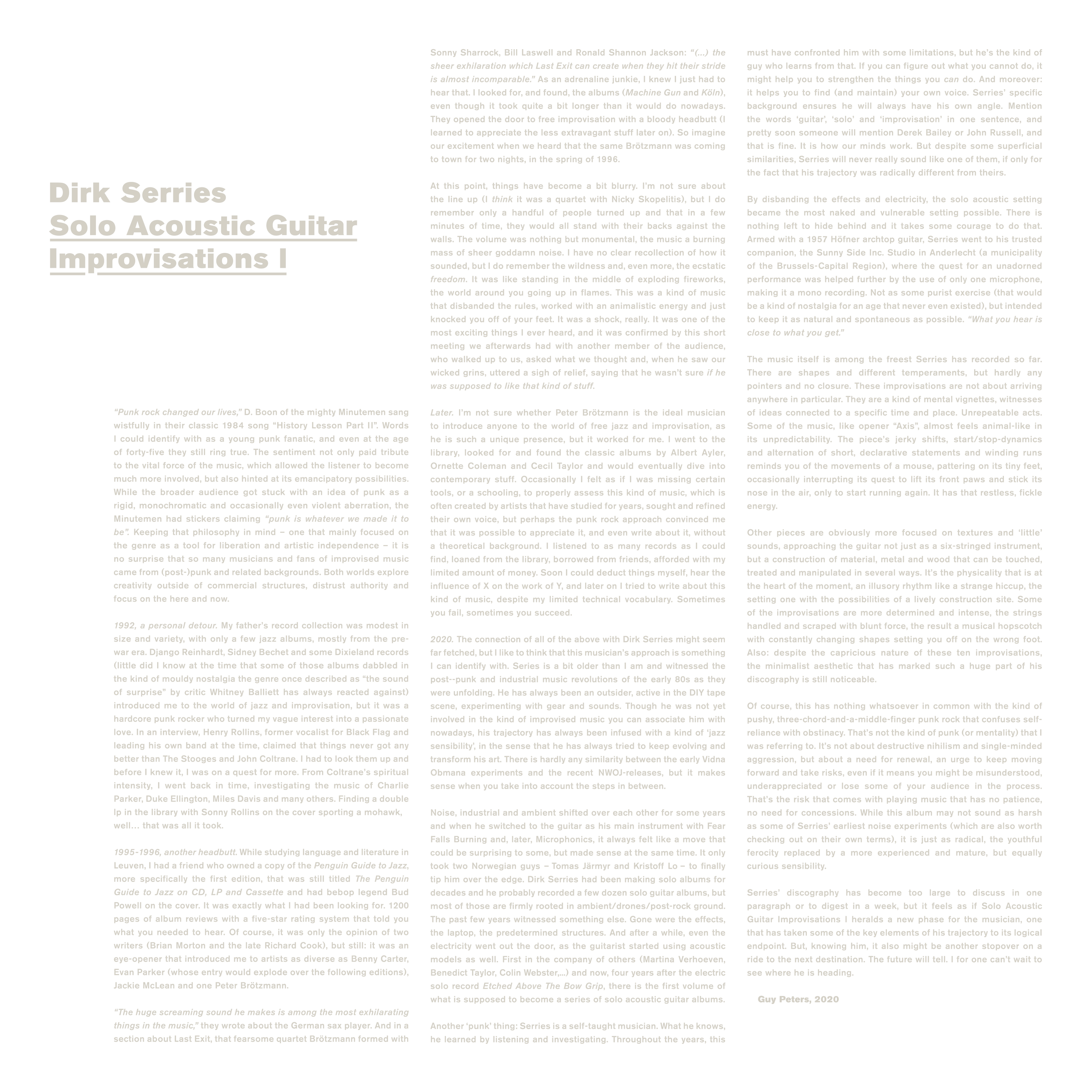
Privileged to have a piece from DIRK SERRIES’ Solo Acoustic Guitar Improvisations I aired on BBC 3’s FREENESS, an excellent radioshow produced by Rebecca Gaskell and hosted by Corey Mwamba. Listen back here.
Gonçalo Almeida’s MONOLOGOS A DOIS LP reviewed on Jazz.pt (in Portugese) and received an excellent 4,5 out of 5 rating !!! Still available here and here.
“Sendo a livre-improvisação uma música iminentemente colectiva e criada ao vivo, o solo absoluto (um só instrumentista) foi definido como um “monólogo a dois”, mas este “a dois” tem como subentendido que se trata de uma relação directa entre quem toca e a sua audiência. Em tempos de pandemia (este LP foi gravado em Julho do ano passado numa igreja vazia de Roterdão), Gonçalo Almeida assumiu a solidão do acto criativo e centrou essa relação entre si mesmo e o seu instrumento, ainda que o propósito do registo fosse a partilha com outros ouvidos – não muitos, dado que se fez apenas uma edição de 100 exemplares deste vinil. O resultado está bem patente em dois aspectos: um é a fisicalidade do jogo e do “playing” entre contrabaixista e contrabaixo, por vezes parecendo mesmo que assistimos a uma luta (ou a uma dança) entre ambos, e o outro está no carácter exploratório, investigativo, das intrigas urdidas.
Essa solidão é ouvida a cada momento na muito próxima presença do contrabaixo, nos gestualismos que imaginamos por parte do contrabaixista (algo que nos vem da memória de quando havia concertos com público) e no modo como o espaço – um espaço que sentimos vazio – enforma o que os dois corpos, o do músico e o do contrabaixo, fazem um com o outro, um sobre o outro, um procurando dominar, o outro resistindo ou colocando-se de acordo, numas ocasiões sobressaindo o querer do músico, noutras vingando a vontade do instrumento e, aqui e ali, conseguindo-se uma paridade e até o que pode passar por empatia. Os geralmente curtos 12 “monólogos a dois” distinguem-se pelos motivos que cada um desenvolve, e chegamos inclusive a imaginar uma mesa de dissecção no altar da igreja. Almeida tenta desmontar os órgãos do contrabaixo e remontá-los de outra maneira, mas este é um corpo vivo e autónomo com os seus próprios maquinismos e o que sucede nem sempre parece coincidir com as determinações que, supomos sem ver, vêm do corpo humano. Quem diria que o confinamento pandémico a que estamos obrigados se traduziria numa outra abordagem musical à improvisação, mas aqui está a prova.
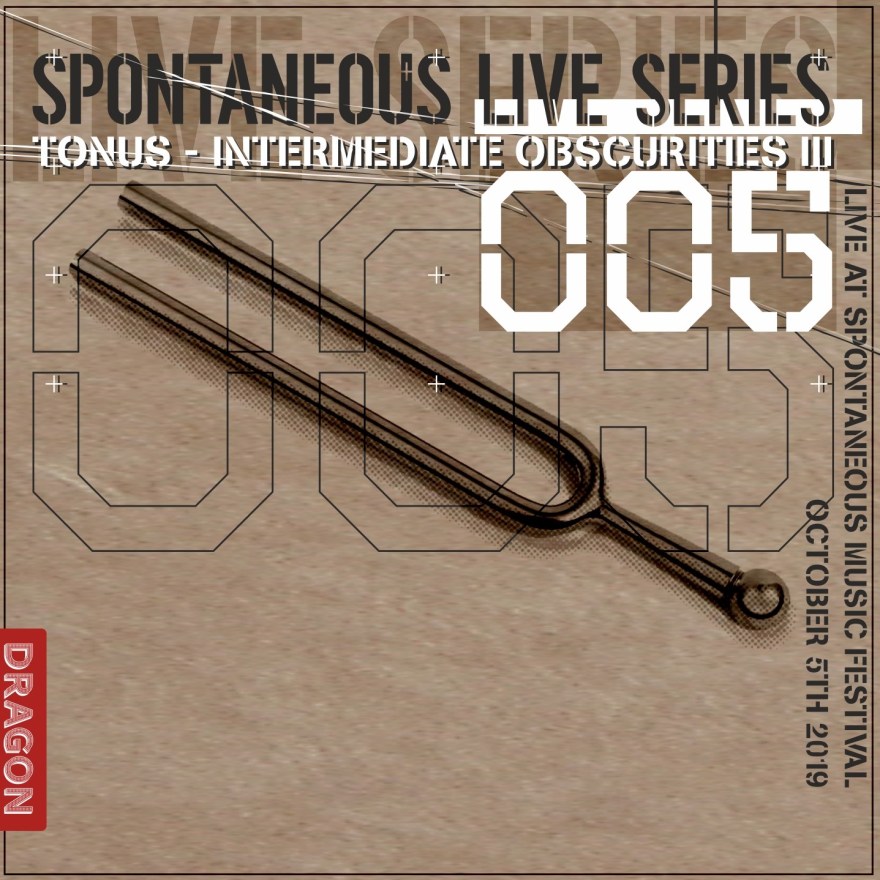
TONUS’ recent live release ‘Intermediate Obscurities III’ on Spontaneous Live Series is receiving praise. Here’re two new lovely reviews.
“4 out of 5 stars !! To był z pewnością jeden z najcichszych i najspokojniejszych sobotnich wieczorów w kilkunastoletniej historii klubu Dragon. Pomieszczenie bezpośrednio sąsiadujące z salką koncertową (tu zwaną Małym Domem Kultury), zazwyczaj pełne restauracyjnych klientów, zostało opróżnione ze wszelkiej materii ożywionej, zdolnej wydawać jakiekolwiek dźwięki. Na tzw. bramce stanęli uzbrojeni po zęby, postawni mężczyźni, których zadaniem było niedopuszczenie do sytuacji, by po godzinie zero ktokolwiek prześlizgnął się przez klubową śluzę wejściową. Ci szczęśliwcy, którym udało się zasiąść na widowni, nie mogli wydawać z siebie jakichkolwiek dźwięków w trakcie koncertu, ich oddechy musiały być miarowe, a przełykanie napojów gazowanych całkowicie bezszelestne. Panie i Panowie, Tonus – the most silent band in the world!
Graficzna notacja, która kreuje proces improwizacji zdaje się pozwalać muzykom na niezbyt wiele, a może jest jednak dokładnie odwrotnie – akord gitary, cisza, szum i delikatne podmuchy z tuby saksofonu, tudzież gryfów licznych instrumentów strunowych, mała pompa-ssąco tłocząca, a potem znów akord gitary, cisza i powtórka zadanej sekwencji. Ośmiogłowa hydra pracuje na razie w edycji stand-by. Z przemożnej ciszy rodzi się życie, machina mikro dźwięków, egzotyka stuprocentowej akustyki, metafizyka improwizacji. Swoją obecność na scenie zaznacza też piano, syjamski brat gitary, zdaje się, że kolejny cerber brzmieniowego ładu i dramaturgicznego porządku. Struny, pudła rezonansowe, tajemnica nieznanej przestrzeni, oniryzm ulotnej chwili. Pierwsza zaplanowana cisza zupełna następuje tuż przed upływem 5 minuty koncertu. Życie pozagrobowe Dragona jednak trwa. Coś zaskrzypiało, ktoś głęboko westchnął dwa piętra niżej. Cisza żyje niepełną minutę.
Nowe otwarcie dzieje się za przyczyną … kolejnego akordu gitary. Wokół niego buduje się strumień mikro fraz, których gęstość po każdej pętli wydaje się rosnąć. Posadowione na lewej flance skrzypce pozwalają sobie nawet na kilkudźwiękową sekwencję zdarzeń. Z drugiej strony sceny, w okolicach werbla coś z czymś intrygująco rezonuje. Pianistyczne preparacje reagują na wszystko ulotnym echem. Stają się drugim po gitarze sercem tej improwizacji. Bogactwo dźwięków rodzi się w naszych uszach, które bolą z wysiłku wyjątkowo uważnego słuchania. W połowie 10 minuty następuje kolejna, zaplanowana cisza, która – to już wiemy – jest tu po prostu kolejnym dźwiękiem, kolejnym aktorem spektaklu nieoczywistości.
Formuła improwizacji wynikająca z graphic score, budowana dyktatem umiarkowania i minimalizmu, z czasem zdaje się wydobywać z każdego muzyka dodatkowe pokłady kreatywności. Skoro mam do dyspozycji źdźbło dźwięku, staram się przekazać w nim całe skomplikowanie otaczającego nas świata. Dużo dzieje się na strunach, ale kolejnym dramaturgicznym peakiem wydaje się być przede wszystkim … dźwięk gniecionej kartki papieru, który podprowadza nas pod kolejny interwał ciszy. Następuje on w 18 minucie i tym razem trwa pełną minutę zegarową!
Na lewej flance groźnie pomrukuje cello, piano trzyma z nim sztamę, a skrzypce już po raz drugi tego wieczoru decydują się na dłuższe frazowanie. Każda odsłona tego niezwykłego spektaklu, wyznaczana żywą ciszą, dostarcza publiczności nowych wrażeń, sekwencji dźwięków i intrygujących rezonansów. Tu jednak, gdzie każda fonia może znaczyć tak wiele, wyraźny i zdecydowany dźwięk klawisza fortepianu brzmieć może niczym złowroga burza w piorunami. Dobrze też słyszymy silnie oddychające dysze saksofonu. Werbel i kilka dołączonych do niego akcesoriów zdają się budować strugi post-ambientu, który przy okazji lepi kilka zabłąkanych fraz innych instrumentów. Na gryfie altówki tańczą wyjątkowo małe palce jakże postawnego mężczyzny. W okolicach 26 minuty improwizacja, którą stymulują akordy gitary żyje już prawdziwie własnym życiem, do tego stopnia, iż możemy ogłosić, iż właśnie powstająca garść długich fraz jest na tyle głośna, iż skupiony widz może śmiało przełknąć łyk piwa, nie zakłócając przy tym przebiegu koncertu. Szczególnie aktywna w tym momencie jest lewa flanka, za którą odpowiada frakcja wschodnioeuropejska z skrzypcami, gitarą, fortepianem i wiolonczelą. Na prawej flance, definitywnie zachodnioeuropejskiej, równie wiele znów dzieje się na perkusyjnym werblu. Po wybiciu 28 minuty scenę Dragona znów spowija jednak cisza. Uprzedźmy wypadki – ostatnia tego wieczoru.
Trzeszczą stare podłogi, drżą struny opuszczone przez muzyków, pulsuje werbel, a fortepian komentuje wszystko kilkoma dźwiękami wprost z klawiatury. Finałowa faza spektaklu toczy się pełnią życia, trwa niczym najlepsze chwile pięćdziesięcioletniej historii AMM – dźwięki mówią, oddychają, reagują na siebie, tworzą mgławice i płynne strumienie powietrza. Na finał zupełny cudownie lepią się w kolektywny dron.” Jazzarium – Poland
“Un super groupe pour une super musique centrée sur les partitions graphiques du guitariste Dirk Serries. Violon, alto et violoncelle : Ostap Manko Benedict Taylor et Anna Szmatola. Guitares acoustiques Pawel Doskocz et Dirk Serries. Saxophone et percussions : Colin Webster et Andrew Lisle. Intermediate Obscurities III est une suite jouée d’une traite durant 40:27 et enregistrée le 5 octobre 2019 lors du Spontaneous Music Festival au club Dragon à Poznan. La partition graphique dont j’ignore le contenu et les intentions, est focalisée sur les interventions minutées de chaque instrumentiste en utilisant des techniques alternatives non conventionnelles : frottements, glissandi, silences, bruits, forte isolé, note tenue en pianissimo, répétitions, percussions, sifflements, grincements, résonance, toucher sensible, etc… lignes, points, courbes, arcs, foisonnement étiolé. C’est exécuté – improvisé avec une belle coordination, des alternances, des contrastes, des interférences, … et un focus intense sur la dynamique sonore et l’écoute mutuelle, sans dogmatisme. Le saxophone de Colin Webster est complètement intégré aux interactions subtiles des cordes. On se demande même s’il y a un saxophone et une batterie. La musique respire et on distingue plusieurs mouvements séparés par des silences qui semblent de plus en plus faire partie de la musique au fil de son écoulement. C’est sans nul doute une excellente réalisation et, à mon avis l’album le plus marquant de la Spontaneous Live Series.
Encore toutes mes félicitations à Dirk Serries pour avoir proposé et conçu cette œuvre, Intermediate Obscurities III, qu’il devrait pouvoir réaliser en Belgique.” Orynx-Improv’ And Sounds – Belgium
Absolutely lovely review by Georges Tonla Briquet of DIRK SERRIES’ ‘Solo Acoustic Guitar Improvisations I’ for Belgium’s Jazz’Halo.
“Ik wil bewust geen perfecte plaat maken”
Voor de veertigste release op zijn label A New Wave Of Jazz besliste Dirk Serries dat het net iets wat specialer mocht zijn. Waarom bijvoorbeeld geen nieuwe soloplaat van zichzelf? En ziedaar ‘Solo Acoustic Guitar Improvisations I’, uitgevoerd en uitgebracht volgens de visie die hij nog steeds hanteert sedert het begin: “The aim of art is to represent not the outward appearance of things, but their inward significance”.
Wie Dirk Serries en zijn label (nog) niet kent, zou kunnen denken dat het hier om een narcistische zet gaat. Niets is minder waar. Sinds de oprichting van A New Wave Of Jazz heeft Serries zich ingezet om muziek uit de marge, in casu gedurfde en soms heel extreme improvisatie, in de kijker te plaatsen door samen te werken met grote actoren uit dit actieterrein. Onder hen Colin Webster, John Russell, Cel Overberghe, John Dikeman en Otto Kokke.
Een Höfner archtop gitaar en een ribbonmicrofoon
Op 31 juli 2020 trok onze man naar de ondertussen voor hem vertrouwde Sunny Side Inc. Studio in Anderlecht, gewapend met zijn “Höfner archtop guitar” uit 1957. Waarom net deze akoestische gitaar? “Een melodieuze songschrijver ben ik niet. Het onderzoek naar klank is mijn ding. Met dat doel voor ogen is de akoestische gitaar het prioritair instrument voor mij. Van de Höfner archtop heb ik zeven modellen. De keuze was deze allemaal te gebruiken voor een enkele soloplaat of met elk apart een opname te maken. Uiteindelijk ging ik voor die tweede optie. De reden: elke gitaar heeft een eigen klank waardoor de fysieke connectie ook verschilt. Overschakelen van het ene naar het andere exemplaar vergt telkens een switch van jezelf”.
Haast even belangrijk was de microfoon, een AEA R44 Anniversary Edition bandmicrofoon (ribbonmicrofoon) op precies een halve meter geplaatst. Het voordeel van dergelijk type is dat het geproduceerde geluid nog natuurlijker gevat wordt dan bij een dynamische microfoon. Het was meteen ook de enige in de ruimte, wat maakt dat het hier om een mono recording gaat. Tot hier de technische details.
En dan kwam de grote uitdaging om ideeën te kanaliseren. Het gevecht van de eenzame gitarist met de lege opnameband. Vooropgezette structuren had Serries niet in gedachten. “Ik stapte de studio volledig onvoorbereid binnen, met uitzondering van gitaar- en microfoonkeuze. Iets anders werkt niet bij mij. Ondertussen heb ik al de volgende soloplaten opgenomen. Voor volume twee en drie had ik een en ander wat voorbereid waaronder een “prepared guitar” met stokjes. Dat was echt niet mijn ding. Het leidde enkel maar tot belemmering”.
Editing verboden
De korte intro omvat wat schuifelen over de snaren in een gemuteerde bluesmodus. Vergis u niet. Juke joint- of “front porch” taferelen uit het diepe zuiden van de Mississippi-delta zijn niet aan de orde van de dag. Het daaropvolgende ‘Grid’ zet de toon voor het vervolg. Vanaf dan hoor je een artiest die zijn innerlijke kwelduivels pareert. De snaren worden heel wat dwingender beroerd, gekoppeld aan percussieve uitlatingen. Beide kanten laten zich zo beluisteren als de soundtrack bij een kubistisch diorama.
Editing is uit den boze bij Serries. Wat hij speelde, is ook op de plaat terechtgekomen. “Ik begon een stuk, pauzeerde even en bouwde dan verder met wat ik net deed. Zo ontstond geleidelijk aan een samenhangend geheel, track na track, op het moment zelf. Het is dus niet zo dat ik een halve dag improviseerde en nadien ging knippen en plakken. Er werden evenmin eventuele fouten weggehaald. Dat is nochtans makkelijk tegenwoordig. Je kan een verkeerde noot wegknippen zonder dat iemand het merkt maar dan bedrieg je jezelf. Ik breng alles ongefilterd, een perfecte plaat maken wil ik bewust niet. In mijn ogen bestaat die trouwens niet. Je mag het moment van zwakheid horen. Er kwam enkel wat mastering aan te pas om het volume in evenwicht te brengen”.
Improvisatie als jazzbenadering? De art brut van het gitaarspelen? Een sculpturale snarendans? Allemaal omschrijvingen die slechts een benadering vormen maar vooral een tekortkoming voor deze intimistische luisterervaring. Dergelijk ambachtelijk musiceren verdient het om ontdekt en ontleed te worden door de luisteraar zelf. Deze laatste dient wel een totaal vrijdenkend uitgangspunt in te nemen.
Aangezien het een speciale release betreft, is deze niet enkel digitaal verkrijgbaar maar tevens op vinyl, beperkt tot honderd exemplaren. Binnen de kortste tijd wordt dit gegarandeerd een felbegeerd collector’s item.
Om Serries zijn trademark als solomuzikant volledig te doorgronden, is het afwachten op de volgende releases in deze reeks van zeven. ‘Solo Acoustic Guitar Improvisations I’ is een ideaal instapmoment.”

It’s once again bandcamp Friday so no fees. Get over to our page and pick out your favorite sonic poison.
 dirkserries.com