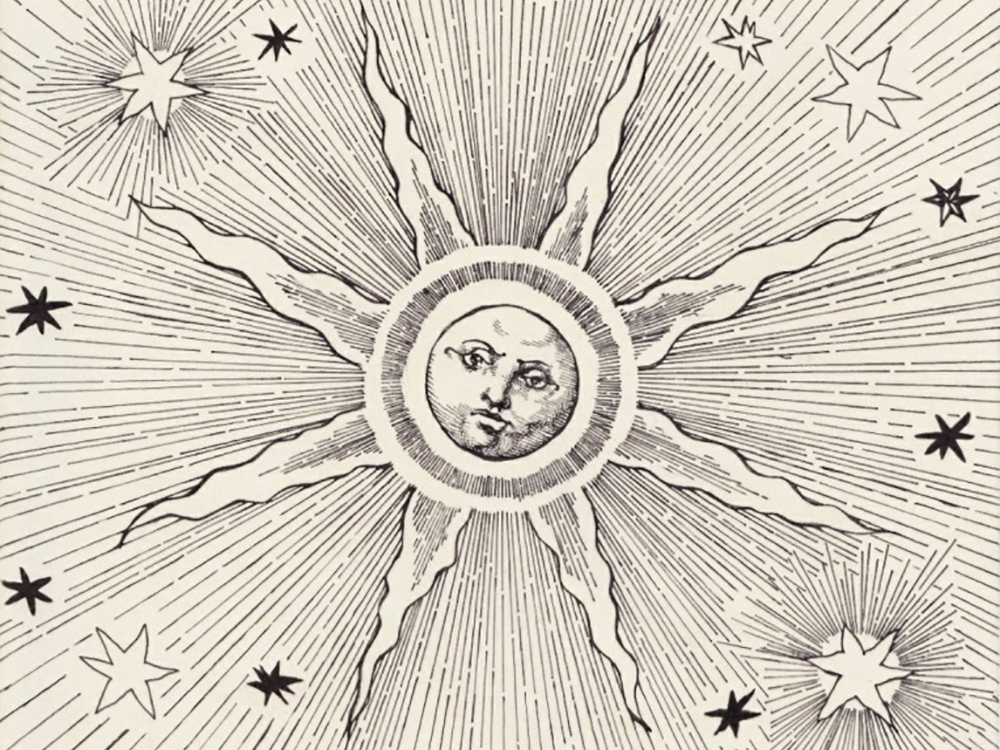
In 1987 VIDNA OBMANA was approached by a local experimental theatre compagny for creating a soundtrack to their pending theatre piece ‘Experience Artaud’. A play that focused on the turbulent life of French artist Antonin Artaud (1896-1948). After several meetings, VIDNA OBMANA worked on the soundtrack which initiated his departure from his pure noise work. Utilizing a KORG MS 20, tape loops, shortwave radio and his voice VIDNA OBMANA created a haunting soundtrack that would support the turmoil artist Antonin Artaud experienced. Unfortunately the funding fell through for the theatre company and the play was never materialized and ever performed. However VIDNA OBMANA’ soundtrack got a small cassette release on his own short-lived M.O.M. (Mechanical Orchestration Music) label. For a limited time the full soundtrack is available at ‘name your price‘. Thank you for your support !
Today is BANDCAMP FRIDAY (a special day in which bandcamp allows us musicians, independent labels to collect fee-less our sales). But we also have some important news to share…
Due to moving houses to another country, we’ll be putting our mail-order service on hold till at least February 2026 – in order to sort everything out in terms of shippping options and costs, etc. However if you want to catch upon your collection, now it’s that moment. We’re offering you a 40% discount on any title you want to order, this runs to October 15th. Till that day we’ll accept any order of physical items. This way we can still handle all the packaging and making sure the orders are on their way to you.
Use the code : moving2025
Unfortunately we’re still not able to ship any physical orders to the USA, due the unclear situation with the pending import taxes and the required documents. Our sincere apologies for this inconvenience.
Use your discount code through the following bandcamp sites :
Here’s a new one in the label’s digital series. When German saxophonist STEFAN KEUNE, UK violist BENEDICT TAYLOR and Belgian guitarist DIRK SERRIES got together in September 2022 for a concert at jazzclub PlusEtage in Baarle-Nassau (The Netherlands), they were able to schedule in a Sunny Side Inc. Studio session. Check out their live performance released on A New Wave Of Jazz’s 3xCD ‘Live At PlusEtage’ here : https://newwaveofjazz.bandcamp.com/album/live-at-plusetage-volume-1
On Sunday October 1st, 2022 they entered this beautiful and acoustically pitch-perfect live room for a spontaneous trio interaction uniting three wilful players. The result is a fascinating journey through the different combined textures, motives, opposites and harmonies, conducted by space, time and location.
BANDCAMP FRIDAY
Oh yes, today it’s once again BANDCAMP FRIDAY but we also have some important news to share… Due to moving houses to another country, we’ll be putting our mail-order service on hold till at least February 2026 – in order to sort everything out in terms of shippping options and costs, etc. However if you want to catch upon your collection, now it’s that moment. We’re offering you a 40% discount on any title you want to order, this runs to October 15th. Till that day we’ll accept any order of physical items. This way we can still handle all the packaging and making sure the orders are on their way to you.
Use the code : moving2025
Unfortunately we’re still not able to ship any physical orders to the USA, due the unclear situation with the pending import taxes and the required documents. Our sincere apologies for this inconvenience.
Use your discount code through the following bandcamp sites :
VITAL WEEKLY REVIEW : If you wonder how deep the vaults of Vidna Obmana are, I have the same question. I’ve known Dirk Serries, also known as Vidna Obmana, since the first day he started as a short-lived noise project, and now, 40 years later, he surprises me with yet another triple CD of music, comprising 16 long pieces recorded from 1995 to 2002; only four of these have been released, three on compilation CDs and one on a very limited 7″. I heard one of these four, so, for all I know, all the stuff I never heard before. By the mid-1990s, Serries had a clear vision of what Vidna Obmana should sound like, utilising “Atmospheres, various flutes, overtone flutes, percussion, rhythm programming, dreampipes, recycling, and abstract mutations, as well as voices,” and expanding on these ideas. Massive, sustaining ambient pieces, long flowing paths, lots of sound effects, processing those acoustic sounds. Sometimes there’s a bit of tribalist rhythm, nothing too much in your face, except for the first part of ‘Recoils In Anger I & II”, which is something of a distraction, but working very well as a counterpart for the rest of the album. The use of voice in ‘Shaking The Surreal’ is something I haven’t heard before in Vidna Obmana’s music, but maybe I simply forgot. Otherwise, it is a very coherent collection of very typical Vidna Obmana pieces. I am wondering why they have not been released. They are as good as any from that time, and I can imagine a well-known name like Vidna Obmana being swamped with requests for a compilation track in those years (the compilation as the starting point for any new label). After three solid hours of musical head spacing, that’s one question I had, the other being: how deep are these vaults? What’s more to come? How many more 3CD sets can we expect – you may not find the answer in Vital Weekly, as Vidna Obmana outlives us.
DE SUBJECTIVISTEN REVIEW : Inmiddels is het geweldige Poolse Zoharum label ook begonnen aan imponerend vierluik rondom de Vidna Obmana compilatie Twilight Of Perception (1996), die 10 niet eerder uitgegeven tracks bevatte en geen gewoon overzichtswerk was. Toch bood het een mooie instap in de wereld van Vidna Obmana, die op toonaangevende wijze de wereld van dark ambient, al dan niet met drones, industrial en tribale geluiden, vorm heeft gegeven. Begin dit jaar verscheen deel één van al en kreeg je in totaal 3 cd’s met in totaal 23 tracks, die samen drie uur en een kwartier duren. Er stonden slechts 3 tracks van het oorspronkelijke album op, de rest was afkomstig van wat er nog op de planken lag, exclusieve bijdragen op vroegere compilaties, labelsamplers en magazines. Bepaald geen kliekjes, alhoewel kliekjes ook meestal prima zijn. Datzelfde geldt voor het tweede deel Twilight Of Perception Redux Volume Two 1995-2002, dat wederom 3 cd’s telt met in totaal 16 tracks van bij elkaar dik drie uur lang. Slechts 1 track komt van de oorspronkelijke compilatie en nog 3 andere tracks hebben eerder op andere compilaties gestaan. De rest is nog nooit eerder uitgebracht. Het is bijna niet te geloven hoeveel hij nog heeft liggen en van hetzelfde hoge niveau als zijn reguliere albums. Hij laat hier weer fantastische atmosferische ambient horen, die hij middels elektronica, (boventoon) fluiten, percussie, ritmische programmering, dreampipe, gerecyclede en abstracte geluiden en zang tot stand heeft gebracht. Met dit vierluik brengt hij gewoon al meer uit dan de gemiddelde muzikant uitbrengt. Het is een must voor de fans en wederom een prima instapwerk om deze legendarische muzikant te leren kennen.
VER SACRUM REVIEW : Twilight of Perception Redux Volume Two è molto più di una semplice ristampa o di un’operazione d’archivio: è una cartografia sonora del sottosuolo creativo di Dirk Serries, meglio conosciuto sotto lo pseudonimo di Vidna Obmana, uno dei nomi più enigmatici e coerenti dell’ambient europeo. Con questa seconda parte del progetto Redux, dedicata al periodo 1995–2002, l’ascoltatore viene invitato a esplorare una fase di transizione e consolidamento dell’estetica obmaniana, in un periodo in cui l’artista belga si muoveva tra minimalismo atmosferico, tribalismo meditativo e sperimentazione elettroacustica. Il lavoro di raccolta e sistematizzazione operato da Serries qui assume i tratti di una vera e propria curatela filologica. I brani, originariamente sparsi in compilation oggi introvabili, singoli a tiratura limitata o pubblicazioni su formati minori, vengono qui riuniti con ordine e rispetto cronologico, accompagnati da un’attenta rimasterizzazione e, soprattutto, da un commento personale dell’artista, che offre uno sguardo intimo sulla genesi e l’intento originario di ogni traccia. Non si tratta, però, di un’antologia fredda o museale: Twilight of Perception Redux Volume Two è un oggetto vivo, profondamente narrativo, che restituisce l’evoluzione di un linguaggio sonoro ormai pienamente maturo. La raccolta comprende tre CD – ciascuno con una propria micro-identità pur restando legato all’insieme – e funziona tanto come compendio quanto come supplemento alla discografia ufficiale di Vidna Obmana. Si ritrovano in questi lavori rari le linee guida di quegli anni: il lento e meditativo sviluppo delle texture, la predilezione per i suoni naturali (flauti, percussioni trattate, field recordings), il dialogo tra drone music e ambient rituale. Molte tracce portano con sé la forza di un tempo sospeso, in cui l’ascolto diventa quasi un atto contemplativo. Altre, più rarefatte e sperimentali, documentano la curiosità esplorativa di Serries verso la manipolazione del suono, la spazializzazione, la disintegrazione ritmica. Il tutto è confezionato in un digipack a otto pannelli, con un’elegante veste grafica curata attraverso le fotografie di Martina Verhoeven, la cui estetica sobria e meditativa si sposa perfettamente con l’universo sonoro del musicista. La scelta grafica non è casuale: la fotografia agisce come estensione visiva dell’immersione uditiva, suggerendo paesaggi interiori e tempi dilatati. Twilight of Perception Redux Volume Two si rivolge tanto agli appassionati di lunga data quanto ai nuovi ascoltatori desiderosi di esplorare la produzione storica di un artista che ha fatto scuola nel campo dell’ambient. È un’occasione rara per riscoprire materiali altrimenti perduti, e per comprendere – attraverso queste tessere sonore – l’evoluzione silenziosa ma inarrestabile del linguaggio di Vidna Obmana. Questa raccolta non è solo un atto di recupero: è un rituale di memoria sonora, che celebra l’importanza del dettaglio, del tempo lungo, del suono come esperienza totalizzante. Un’opera che ci ricorda quanto, nella musica ambient, anche il silenzio tra le note possa essere pieno di significato. Consigliato chi ama Brian Eno, Steve Roach, Robert Rich e i territori più meditativi della musica elettronica sperimentale. Un ascolto obbligato per i cultori della deep ambient e per chi cerca nella musica un luogo da abitare.
KRAUTNICK REVIEW : Als Vidna Obmana – oder hier: vidnaObmana – geht Dirk Serries andere Wege als auf seinen aktuellen Solo-Alben: Diesen Ambient generiert der Antwerpener nämlich nicht allein mit der Gitarre, sondern allein mit einer Vielzahl anderer Instrumente, zudem lässt er es zu, seine himmlischen Soundscapes auch mal von leichten Rhythmen zu begleiten. Dieser zweite Teil der „Twilight Of Perception Redux“-Reihe weicht vom ersten dadurch ab, dass drei Viertel der 16 auf drei CDs verteilten Tracks bisher unveröffentlicht waren; beim ersten fiel die Quote weit geringer aus. Die Entstehungszeit zwischen 1995 und 2002 ist dabei beinahe unerheblich: Legt man die Alben auf, taucht man ganz im Hier und Jetzt in der Musik ab.Diese Sorte Ambient kommt zwar wie gewohnt ohne konkrete oder gar wiederholte Melodien aus, aber definitiv nicht ohne Harmonien, die Serries hier mit unterschiedlichen Mitteln erzeugt, die man wiederum beim besten Willen nicht ermitteln kann, weil er sie alle verfremdet. Aufgelistet sind in der Info: diverse Fujara genannte slowakische Hirtenflöten, Obertonflöten, Percussion, programmierte Rhythmen, ein Instrument namens Dreampipe, seine Stimme sowie recycelte und abstrahierte Mutationen. So vage wie diese Liste hält sich auch die Musik. Der Opener mit dem programmatischen Titel „The Returning Voyage“ etwa klingt nach Neoklassik, also Streichern, und die kommen hier gar nicht zum Einsatz. Hier erklingt zudem auch gleich eine Art Schlagzeug, dezent nur. Obschon diese Sammlung in der Mitte der Neunziger erst einsetzt, erinnert „Urban Dislocation (Alt. Version)“ an zweiter Stelle mit seinen noisigen Drumsounds an die Ursprünge von Vidna Obmana. Jene Sounds begleiten zudem beklemmende Harmonien, die einiges Unwohlsein auslösen; diese spannende Sorte Musik ist auf dieser Sammlung damit abgehakt, der Rest gestaltet sich wieder entspannender. „Somersaults“ etwa ist eine fernöstliche Atemtherapie, die zunächst mit dezidiert angeschlagenen Glöckchen hypnotisiert. Ein nervöses Rascheln liegt über den wunderschönen Soundscapes von „Subliminal Storm“, und wunderschöne Soundscapes bilden auf dieser Sammlung den Großteil der Musik. „Recoils In Anger I & II“ weicht davon ab, es klingt elektronisch, nach Synthieeffekten, indes kein Bisschen nach Ärger. Das Rascheln kehrt nach der Hälfte von „Shaking The Surreal“ zurück, dafür beginnt es ungewöhnlich, nämlich mit Tribal Drums und sogar Stimme. „Towards The Haze (Siren V)“ bietet gefühlt nach Stunden ebenfalls dezente Drums, die im Verlauf leicht an den Motor-Rhythmus von „Stripped“ von Depeche Mode erinnern, inmitten dieses vertonten überirdischen Lichts. Ebenfalls etwas aus den milden Sounds heraus ragt „The Embrace In Motion“ mit Klapper-Percussion, „The Ceremonial Storm“ hingegen ist genau das, mit Regenmacher und schamanischen Sounds. In „The Surreal Expansion I, II, III“ regnet es mittendrin, während die Musik wie Wellen schwappt; das überlange Stück endet cineastisch-überirdisch. „Path Of Distortion/The Primary Seeker“ beginnt stressiger, als es der Rest des Albums ist, mit einem modulierten rhythmisch variierten Sound zu den Soundscapes. Die zweite Hälfte wiederum bietet Sounds und Harmonien wie aus einem Horror-Score. Der Titel des letzten Stückes, „Blur“, passt zunächst, aber spooky Klopfgeräusche unterbrechen die diffusen Sounds bald. Serries rief Vidna Obmana – auf Serbisch, відна обмана, eine offensichtliche oder optische Täuschung – vor 40 Jahren mit dem eher im Noise zu verortenden Album „The Ultimate Sign Of Burning Death“ ins Leben, veränderte die Ausrichtung bald ins Sphärische und ließ es kaum 20 Jahre später zugunsten anderer Projekte ruhen, vornehmlich Fear Falls Burning. Gegenwärtig müht sich Serries darum, die unzählbaren Aufnahmen wieder zugänglich zu machen, daher rührt auch der Anlass für diese Compilation, die sich überdies löblicherweise bei Material aus Serries‘ Schublade bedient und die die alte „Twilight Of Perception“-Reihe fortsetzt, die sich seinerzeit bereits auf Unveröffentlichtes fixierte.
CHAIN D.L.K. REVIEW : 4,5 OUT OF 5 STARS ! Not all time capsules come with dust and rust. Some emerge polished, glowing, and humming softly to themselves, like they never really left. “Twilight of Perception Redux Volume Two” is just such an artifact: a sprawling, meditative excavation of Vidna Obmana’s less visible sound-world from 1995 to 2002, restored and re-presented with the care of an archivist, the ear of a composer, and the slightly haunted energy of someone who once recorded music under moonlight. This triple-disc set isn’t simply a box of forgotten tracks – it’s a sonic constellation made of outtakes, alternate versions, and long-lost compilation contributions. These are fragments that refused to stay silent, now woven into a cohesive listening experience by the hand of Dirk Serries, who not only remastered them in 2024 but curated them with the sort of attention one might reserve for dreams that once meant something important, but were never fully understood. Listening to these tracks is less like pressing play and more like opening a portal. There are no choruses to hum here, no rhythmic high-fives. Instead, there’s immersion. Drift. Decay. A slow-breathing ambience where flutes echo like the memory of wind, percussion shuffles through the fog, and the boundaries between organic and digital blur into glimmering irrelevance. The music doesn’t demand your attention – it seduces it. Tracks like “Tapestry of Dust” stretch past the 20-minute mark, blooming like sonic mycelium beneath your skin. “Urban Dislocation (Alt. Version)” pulses with subtle unease, while “The Embrace in Motion” and “Blur” offer fleeting glimpses of melody that feel as if they’re retreating even as you approach. This is ambient music not as decoration but as infiltration – a slow, careful takeover of your inner monologue. The kind of album you don’t finish so much as emerge from, a little disoriented and vaguely grateful. What sets this release apart isn’t just the length or rarity of the material. It’s the sheer intimacy of the sound-making. Flutes (particularly the fujara and overtone varieties) intertwine with processed textures, while dreampipe drones, recycled noises, and gentle rhythmic programming breathe together like elements in a living biome. Even the titles – “The Edge of Everything”, “Path of Distortion”, “The Surreal Expansion” – suggest a kind of mystical cartography, as though these aren’t compositions but coordinates. Everything was recorded and mixed at Serenity Studio in Belgium – an appropriately named headquarters for such delicate sonic work. And while some tracks previously surfaced in obscure formats or long-deleted compilations, most appear here for the first time, freshly dusted and remarkably present. It’s tempting to frame this release as a “collector’s item”, and sure, it is. But more importantly, it’s a space – a vast, slow-moving environment you can enter again and again. Like a lucid dream where gravity is optional, or a desert storm where each grain of sand is whispering something just for you. Vidna Obmana’s work has always nudged the border between ambient and sacred. In this Redux, that spiritual undercurrent feels even more pronounced. The music doesn’t just fill a room – it transforms it into a temple of lost futures and quiet revelations. Twilight may be a metaphor, but here it’s also a technique – fading, layering, remembering. And perception? Well, that’s optional.
GONZO CIRCUS REVIEW : ‘TWILIGHT OF PERCEPTION REDUX VOLUME TWO’ compileert verder waar het eerste deel ophield. Opnieuw drie bomvolle (180+ minuten) cd’s nooit eerder uitgebracht of moeilijk te vinden Vidna Obmana-materiaal, zorgvuldig samengebracht, geremasterd en in een niet toevallige volgorde gezet. Serries’ majestueuze elektronische soundscapes, drones en loops – er was toen nog geen sprake van de elektrische gitaar als voornaamste instrument – worden hier verrijkt met allerlei exotische fluitinstrumenten zoals de fujara en wat (tribale) percussie links en rechts. Het uitgesproken ritmische ‘Recoils In Anger I & II’ doorbreekt de flow en zorgt net als de stemmen in ‘Shaking The Surreal’ voor een aangename afwisseling. Merkwaardig wat er allemaal nog aan exclusieve topkwaliteit in ’s mans kasten en schuiven ligt uit die wel heel erg productieve periodes; Er komen trouwens nog twee delen.
ONLYDEATHISREAL REVIEW : Belgian Vidna Obmana and Polish Zoharum continue their joint effort to unearth rarities and unreleased tracks from the former’s archives. Where the first installment in this series spanned the years 1990 to 1998, this second compilation starts from 1995 and ends in 2002. Again, the format is three CD’s, each with over an hour’s worth of music. So, in total, around three hours and fifteen minutes of ambient is what’s on offer here. In contrast to the first installment, Volume Two also consists largely of previously unreleased tracks. I find this worthy of mention from the bat, considering how vast Vidna Obmana’s catalogue is – if you’re a fan, don’t bother looking through your collection to see which tracks you’ve already got on other releases. Most of these you won’t have. Ambient of a serene and harmonious kind is still the order of the day here. The tracks have grown in length: where Volume One had 23 tracks, Volume Two has 16 tracks, clocking in at about the same running time. This means Vidna Obmana and sole member Dirk Serries have better time to develop and evolve ideas within the tracks. There are some other changes, too. Whereas Part One, at least according to how I recall it (I admit: I didn’t revisit the entirety of it for this review), was largely sans dominant percussive elements, here they are at the fore and core of many tracks. Looped, repeating, vaguely ritualistic and/or tribal percussive patterns give a bit of tangibility to many tracks. If I’m not mistaken, instruments such as flutes and reeds of various kinds have a more pronounced role here and there, lending the music some degree of tribal/ethno ambient vibe. However, for the most part, Vidna Obmana remains Vidna Obmana between the two volumes. This means long, drawn out layers of peaceful, serene synths washing over the listener like waves of some cosmic sea. Undulating, pulsating subsurface layers give depth and substance to the music, whilst various echoing, rattling, droning layers in the background add variation and active elements. Concepts, themes and motifs evolve and emerge slowly, languidly in the lengthy pieces. Sadly, my one major issue with Volume One remains on Volume Two. Sometimes there are long silent sequences between the tracks. This breaks the flow, interrupts a seamless and continuous stream of music, which I believe would serve this kind of music best. But apart from that, Twilight Of Perception Redux Volume Two is a fine release. Personally, I’m preferential towards less percussion in my ambient, which makes me partial to the first volume. But this issue of personal taste notwithstanding, the second volume matches the quality of the first. I must also mention how well these tracks, created over many years and sessions, go together. There are no chafing seams here. Summa summarum, the second volume continues the high quality of the first volume. I’d go so far as to say that for the casual listener, this can already be now called the essential series of releases to get from the Belgian project. Take that with a grain of salt, though: I admit I’m no expert on Vidna Obmana; at best my knowledge of the project and its recordings is spotty. But, yeah, anyhow, good stuff.
DARKROOM REVIEW : Nonostante lo storico progetto del belga Dirk Serries abbia messo fine alla propria attività nel lontano 2007, dopo ventitre anni di onorata carriera, non si ferma la massiccia opera di ristampe dal passato e di raccolta/pubblicazione di materiale inedito o raro, che di certo non manca ad un artista che ha realizzato, sia come Vidna Obmana che come Fear Falls Burning e col proprio nome, una mole di musica davvero enorme. Dei volumi della serie “Twilight of Perception”, collezione di rarità ed inediti, ne fu pubblicato uno solo in formato fisico (il CD del ’96 targato Projekt, ma per la divisione Relic), cui ne seguirono molti altri esclusivamente in download, per una decina in totale. La polacca Zoharum, che si è occupata di tante ristampe di Vidna Obmana, aveva già rilasciato lo scorso anno il primo volume di “Twilight of Perception Redux”, maxi-raccolta divisa in ben tre CD di rarità ed inediti rimasterizzati del periodo 1990-1998. Il secondo volume segue il medesimo schema, con altri tre dischetti racchiusi in un digipack a sei pannelli, ma con estratti recuperati dal periodo 1995-2002, anche questi rimasterizzati, per oltre tre ore di ascolto complessivo. Serries è gran maestro della materia ambient come ben sappiamo, e nel suo lavoro regna assoluta un’alta qualità che ritroviamo anche in quel materiale che non ha trovato posto nelle uscite degli anni d’oro, come ben dimostrano tutte le sedici tracce complessive dell’operazione. Nell’abbondanza dell’offerta, non mancano né quei tribalismi dal sapore esotico ed orientale tipici della scrittura di Dirk (“The Returning Voyage”, “Subliminal Storm”, “Shaking the Surreal”, “The Ceremonial Storm”…), né le altrettanto caratteristiche ambientazioni ampie e radiose (“The Edge of Everything”, “Towards the Haze”…), così come le tessiture dal più elevato tasso filmico di grande effetto (“Horizon Beyond”, “The Delayed Reflection”…) e quelle coltri misteriche abilmente orchestrate per tingere d’arcaico un suono mai ridondante (“Tapestry of Dust”, “Blur”…). Benché si tratti di recuperi di materiale “secondario” riferito ad un preciso arco temporale, il livello dei contenuti di questa corposa raccolta vale decisamente il prezzo d’acquisto, specialmente per i più accaniti estimatori e completisti dell’opera del celebrato ed importante autore belga.
MUSIQUE MACHINE REVIEW : 4 out of 5 stars rating !! Twilight Of Perception Redux Volume Two 1995-2002 is the next in a series of CD compilations from Poland’s Zoharum. Each release in the series serves up a selection of rare and unreleased tracks from Euro ambient pioneer Vidna Obmana, aka Belgium’s Dirk Serries. This three-CD set takes in sixteen tracks, and as you’d imagine from such a collection, we get variation in both the tone/atmosphere, moving from pared-back ambience, all the way through to detailed/rhythmic-edged ethnic ambient works. The three-CD set is presented in an eight-panel digipak. It features an effective mix of pink texts- underlaid by close-up monochrome photos of the leaves of decaying plant life. Just like all of the growing catalogue of Vidna Obmana reissues on the label, we get a nicely moody/ lightly arty and uniform look to the packaging. Compared with the first volume in this series, which featured twenty-three tracks, we only get sixteen here, meaning the track run times are often longer on this three-disc set, and as I touched on earlier, a fair bit of sonic/ mood variation. On the first disc, we move from “Urban Dislocation (Alt. Version)”- which creates a disorienting/ uneasily grim air- with its layers of forlorn/ wavering mid to low end ambient tones, snapping half-buried beats, and foreboding drones. Though to the warbling ‘n’ warming locked drones, hazed skittering rhymes, and almost piping ethno denseness of “Subliminal Storm”. The second disc goes from slowly gliding n’ glowing ambient pitches, shaking/ rattling rhythmic tones, and mumbled male voice flow of “Shaking The Surreal”. Onto the epic twenty-three minutes of “Tapestry Of Dust” which is a slowed ‘n’ shambling blend of drifting vibe simmer, buffeting texture rub, and general low-key tonal unease. On the third disc, we open with taunt but steady tabular trails, mysterious shaker drift, and wavery drones of “The Embrace In Motion”. Moving onto shimmering water tones, moody feedback glides, and building percussive detail/ groove of “The Ceremonial Strom”. With the disc playing out with the track “Blur” which finds slow-mo drone pitch unease meeting sparse/ eerier rhythmic elements, which initially sounds akin to steady light night knockings of the last train. Twilight Of Perception Redux Volume Two 1995-2002 is another fine and varied collection of tracks from one of the masters of the euro ambient form. As always, I’m very much looking forward to the next release in Zoharum reissue series.
ROCKERILLA REVIEW : Il genio tormentato è partito per l’ultimo tour. L’archivio di vidnaObmana è davvero stupefacente. In due nuovi tripli cd il musicista belga ha raccolto ben trentanove brani per la durata complessiva di oltre sei ore di musica. Il primo volume raccoglie per lo più brani già editi su raccolte introvabili. Come Within Whitering Memories apparsa originariamente sulla musicassetta Fairy Tales & Myths (1990, 3Rio Art Tapes), o la parte conclusiva della meravigliosa suite che apre l’album capolavoro Passage In Beauty (1991, Decade),Awaken In Floating Colours – Composition 5 (Ending), pubblicata dalla Projekt di Sam Rosenthal sulla compilation From Across This Gray Land, n° 3 nel 1992. Si tratta in alcuni casi di raccolte che hanno aiutato a definire i confini di una scena in evoluzione, in grado di mettere insieme diversi stili dell’universo elettronico come l’imperdibile The Sombient Trilogy della Asphodel: vidnaObmana è presente sui primi due capitoli della serie, con Equal Distance (uno dei rari brani del musicista belga dove è presente la voce) su The Throne Of Drones, e con Flat Earth sul doppio cd Swarm Of Drones, entrambi pubblicati originariamente nel 1995. Nel complesso si tratta di brani che aiutano a capire il passaggio della musica di vidnaObmana dai primi esperimenti in ambito ambient fortemente caratterizzati dall’immaginario post-industriale, alle distese sconfinate delle opere space-ambient della metà degli anni 90. Solo quattro, invece, le tracce presenti su Twilight Of Perception Redux – Volume Two 1995-2002 già pubblicate in passato: tre su altrettante compilation e una su un raro sette pollici della Klanggalerie del 2002, Isolation Trip/Path of Distortion. Incredibili la qualità degli inediti. Non si spiega davvero come un brano della portata di Tapestry Of Dust non sia apparso su un album di metà anni 90 del musicista belga. Per non dire della suite in tre parti The Surreal Expansion I,II,III, un bagno di ambient stellare a gravità lunare. Da quando Dirk Serries ha ripreso ad osservare il cosmo con il naso all’insù pubblicando nuovi dischi di musica ambient accanto a quelli della sua oramai avviata etichetta free-jazz (A New Wave Of Jazz), deve essersi accorto che l’interesse per la musica di vidnaObmana era tutt’altro che svanito. Nel mese di maggio del 2024 ha così rimasterizzato le ventitre tracce finite poi sul triplo cd Twilight Of Perception Redux – Volume One 1990-1998. E sorte analoga è capitata alle sedici contenute su Twilight Of Perception Redux – Volume Two 1995-2002, ripulite e rimasterizzate durante lo scorso mese di ottobre. Un ascolto che vale come un’immersione rigenerante.
SIDE-LINE REVIEW : A few months ago, we were fortunate enough to discover the first part of this remarkable Vidna Obmana anthology. This second chapter offers 16 tracks that can be considered forgotten or previously unknown, many of them originally appearing only on compilations. These pieces were recorded between 1995 and 2002. For anyone familiar with Dirk Serries’ work under his sonic alter ego Vidna Obmana, this will come as no surprise. The music presents a serene yet at times mysterious fusion of ambient and cinematic soundscapes, occasionally supported by slow, deliberate rhythms. Field recordings and an array of effects drive the atmosphere, while subtle string arrangements add an extra soaring quality. The tracks unfold gradually and, as is often the case, tend toward extended durations—sometimes a bit too long for my taste. Vidna Obmana’s work remains inexhaustible, and this series of albums is undoubtedly a gift for all admirers of his art. (Rating:7).
Dirk Serries is joining Mark Wastell‘s big band INVISIBLE GUARDIANS for an unique concert at Cafe Oto (London, UK) this Tuesday September 16th. In Mark’s own words : “Somehow, I seem to have pulled this one off. INVISIBLE GUARDIANS BIG BAND at Café OTO this coming Tuesday, 16th September. Featuring Jazz FM and Parliamentary Jazz Award winners, a founding member of the Brand New Heavies, a recipient of the Paul Hamlyn Award, a current member of the mightly Cymande, a platinum selling Blue Note Records recording artist, Poll toppers, and collectively, musicians that have worked with the likes of John Zorn, David Sylvian, Chaka Khan, Derek Bailey, Tony Conrad, Keith Tippett, Stewart Lee, Oasis, the London Philharmonic Orchestra, Maggie Nicols and Kid Creole and the Coconuts!“
Matthew Bourne / piano Binker Golding / tenor & soprano saxophone Rachel Musson / tenor & soprano saxophone Ed Jones / tenor saxophone & bass clarinet Sue Lynch / flute, clarinet Ntshuks Bonga / alto saxophone Kevin G Davy / trumpet, flugelhorn Charlotte Keefe / trumpet, flugelhorn Raph Clarkson / trombone Dominic Lash / double bass Caius Williams / double bass Dirk Serries / electric guitar Jackie Walduck / vibraphone Ansuman Biswas / percussion Lascelle Gordon / percussion Will Glaser / drums, cymbals Mark Wastell / drums, cymbals
Tickets are available through the Cafe Oto website.
Dirk Serries is joining Mark Wastell‘s big band INVISIBLE GUARDIANS for an unique concert at Cafe Oto (London, UK) this Tuesday September 16th. In Mark’s own words : “Somehow, I seem to have pulled this one off. INVISIBLE GUARDIANS BIG BAND at Café OTO this coming Tuesday, 16th September. Featuring Jazz FM and Parliamentary Jazz Award winners, a founding member of the Brand New Heavies, a recipient of the Paul Hamlyn Award, a current member of the mightly Cymande, a platinum selling Blue Note Records recording artist, Poll toppers, and collectively, musicians that have worked with the likes of John Zorn, David Sylvian, Chaka Khan, Derek Bailey, Tony Conrad, Keith Tippett, Stewart Lee, Oasis, the London Philharmonic Orchestra, Maggie Nicols and Kid Creole and the Coconuts!“
Matthew Bourne / piano Binker Golding / tenor & soprano saxophone Rachel Musson / tenor & soprano saxophone Ed Jones / tenor saxophone & bass clarinet Sue Lynch / flute, clarinet Ntshuks Bonga / alto saxophone Kevin G Davy / trumpet, flugelhorn Charlotte Keefe / trumpet, flugelhorn Raph Clarkson / trombone Dominic Lash / double bass Caius Williams / double bass Dirk Serries / electric guitar Jackie Walduck / vibraphone Ansuman Biswas / percussion Lascelle Gordon / percussion Will Glaser / drums, cymbals Mark Wastell / drums, cymbals
Tickets are available through the Cafe Oto website.
MATTHEW GRIGG & DIRK SERRIES – INTERVENTION MODEL (lathe cut / tape, Unknown Tongue 2025)
Intervention Model is the first recorded meeting of Belgian polymath Dirk Serries and British free thinker Matthew Grigg. From overamped Shock recs squall to frayed Xpressway thrum, two guitars scorch and smoulder through these four improvised unedited tracks – captured in the reverberant shimmer of Brecht’s Oode Klooster Kapel. The results read like an exploration of sound and noise, stasis and movement, feedback and freedom. Twin guitars in constant exchange of ideas and detail, documenting the calm before/after, and the eye of the storm.
The release is very limited, the numbered lathe cut edition is on 16 copies, the cassette is on 34 copies. Get your copy here…
I had the pleasure and honour a few weeks ago to talk on my weekly radio show, “Between the Grooves,” with Belgium-based Dirk Serries — a sonic artist of longstanding.
I play Dirk’s music quite regularly on my overnight show, “Night Lights with Malcolm Burn” on Radio Kingston in Kingston, New York. If you don’t know Dirk’s work and you enjoy ambient and experimental music that has the ability to transport you to another state of mind, you need to look him up and explore his discography.
Malcolm Burn’s The Long Way Around Substack is a reader-supported publication. To receive new posts and support my work, consider becoming a free or paid subscriber. Go here.
Dirk has experimented with music on the border between avant-garde, industrial, experimental and ambient for close to 40 years now. He released his earliest work (1984) behind the pseudonym vidnaObmana up to 2007 when he closed the book on this project (realizing an extensive discography). In October 2013, Dirk Serries re-booted his classic vidnaObmana ambient sound from the mid-1980s/early 1990s. In contrast to his original music that was mostly synth-based, this ambient music is constructed on electric guitar. Dirk also runs the A New Wave Of Jazz label, dedicated to free improvisation and minimal avant-garde.
Through his experience in the free improvisation Dirk transformed his solo ambient music, originally constructed meticulously by writing strict motives before performing, to being able to improvise 200% and still create his trademark ambient music for which he is recognized worldwide.
“All of this started from the time I was a kid and enjoying early film soundtracks, which fascinated me to the extent that I thought, this would be really cool to make myself,” says Dirk. “It somehow sparked sort of an obsession… it’s not a hobby, it’s not a profession. For me, it’s an obsession — it’s part of who I am, part of my DNA, so to speak.”
We talked about the creative process. “For me, despite how you have to describe your music, for me it’s always been part of an ongoing search for that refinement in sound, and how it would trigger me as a musician to go deeper into something I would love to listen to myself,” says Dirk. “It’s part of an external world that you create for yourself and that’s where I love to be [in].”
Every musician has his ups and downs in realizing — who am I, what am I doing here, is this worthwhile to do? — and I do have that, as well,” says Dirk. “But each time I’m drawn back into it just because of the fact that it just feels comfortable with sitting in that world of sound whatever it is — if it’s an ambient record, an experimental jazz record… it’s all part of one continuing organism that grows, that expands and changes over time as I am, as a person.”
I think it’s fascinating that Dirk puts it this way because I experience the same thing. It’s the same kind of compulsion that I have, if one can call it that. There are a lot of other things that I could be doing in a day but this is what feels like it matters the most. Whether anybody else cares or not it’s not relevant.
Dirk agrees: “It’s a pretty egocentric situation you’re in but it’s also a very therapeutic situation — I feel good about it because there are a lot of things going on in the world, unfortunately, which are not that positive. The music, the sounds, the little space you create for yourself — these are things which I feel comfortable sitting in and from the moment you’re really in there and it works and the music gels, you feel really nicely despite the fact, indeed, whether you will share it with people or not, with the audience.”
“The Stars Sublime” — Dirk Serries — The Might of Stars Sublime (April 2025)
“As a musician you go through phases although it’s all in the same genre but still you have these kinds of variations on the aspect of recording soundscape music. This piece really resembles a little bit of everything I have been doing over these past 40 years. It’s a really beautiful introduction to who I am now,” says Dirk.
“There are different rules to creating such a soundscape although you could easily record it or compose it in a shorter time,” says Dirk. “I always admired Brian Eno and Daniel Lanois when they did their ambient works together. A couple of those songs are pretty short but they still work, and keep the slow pace, as well, so that nothing is abrupt, nothing is really produced in sort of its own level that really changes the entire mood of the songs. It’s artistry.”
This brought back the memory of when I was young and was listening to Pink Floyd’s “Dark Side of the Moon.” When I listen to that record now years later, having made albums and knowing how they’re made, I realized that record was made like a pop record. It wasn’t a pop record, per se, but all the pieces, for instance, even “Us and Them” and some of those tracks are six minutes long but somehow they seem longer. I think there’s an art form to that.
I asked Dirk how he would describe the relation between a keyboard instrument and a guitar in terms of the two instruments’ expressiveness. “That’s a good question and also a difficult question to answer,” says Dirk. “It took me a long time to actually get to the guitar. I started out as a young kid. My first synthesizer was a Korg MS-20 — great sounds and unpredictable, as well. That was all part of my discovery of sound and I stuck to that for a long time. I moved onto digital work stations like the Korg M1 and the wave station and your recording equipment evolved from the 2-track cassette (and 4-track cassettes). Younger listeners will probably never know what happened back then.”
“Also there was the saturation of it when you bounce it because your sound changes over time and back then you had to know that up front,” says Dirk. “Because you knew there was no way back. All these things evolved for me and created such a huge machine to operate because when the computer came, the multi-track and all the editing … and all the synthesizers together … it actually burned me out.
“At that point, I had already introduced the guitar a little bit in my music,” says Dirk.
“After I had recovered from the burn-out…, I sold all my synthesizers. And left over was one very cheap electric guitar and I started from scratch,” says Dirk. “Could I play guitar? No. I couldn’t really play it well then and I still don’t at this point call myself a guitar-player.”
I think that’s the beauty of the guitar. I use a lot of open tunings. I never change my strings. There are a lot of weird, funny things that I do that are very individual; and we invent those things for ourselves. Think of Jimi Hendrix with his guitar upside down and strung the other way up and playing, etc. These are all things you can do with a guitar. Whereas with a keyboard, you press the key and that’s the note that comes out.
Dirk agrees. “The guitar is very organic whether it’s an acoustic or electric guitar,” says Dirk. “Of course, there are big differences. It’s how you apply it, how you take it into your hands. The guitar is an extension of who you are at that point and I learned despite the fact that I was kind of an anti-guitarist. It made me discover a tool (I prefer to call it a tool) that I got so comfortable with over time. I’ve more and more started to play actual real chords on the guitar and incorporate it in my music but keep it experimental. Keep it not really too tonal.”
“This opened a different kind of spectrum for me,” says Dirk.
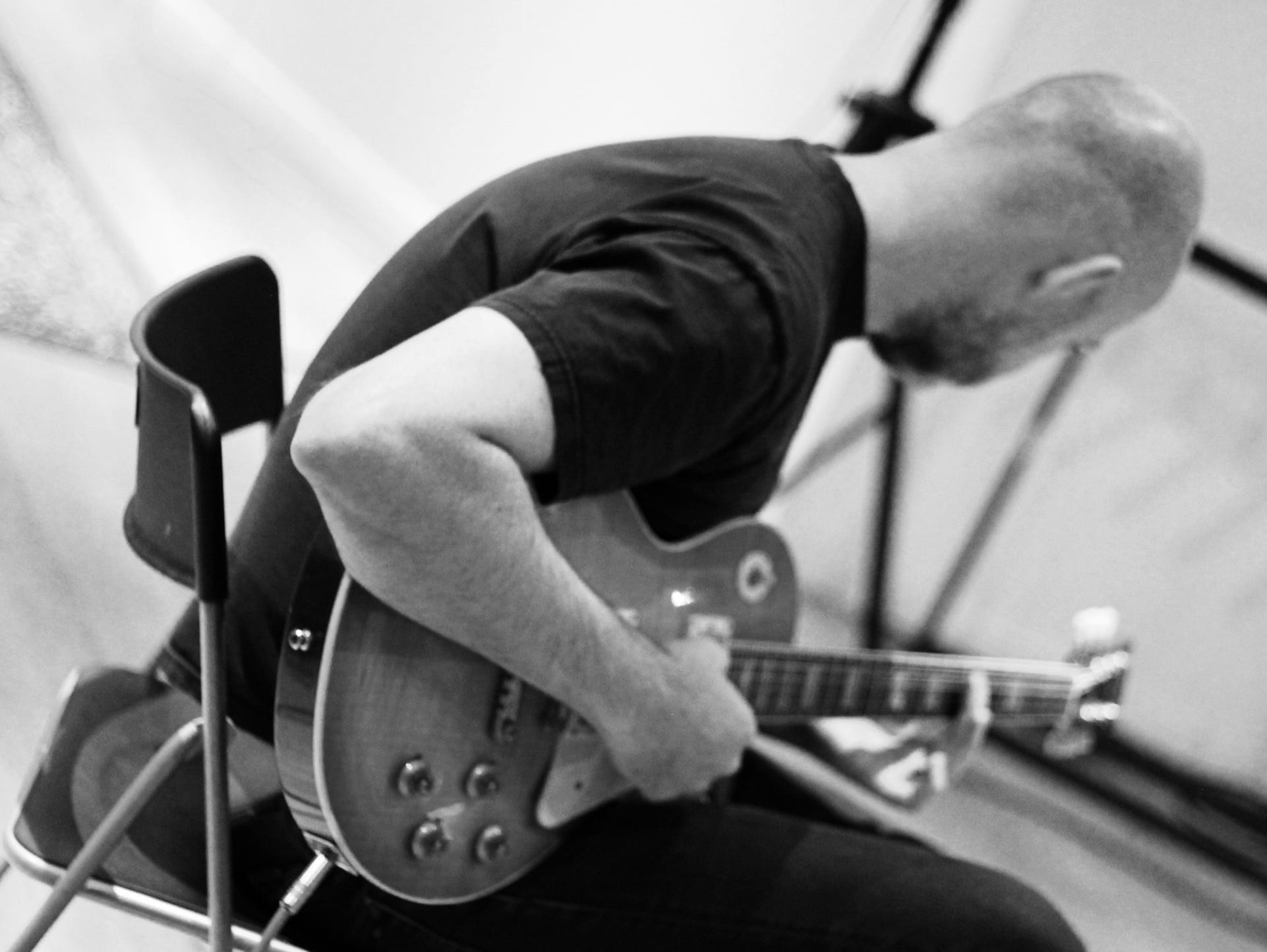
Photo by Shaun Cullen
I asked Dirk how he would describe his music — that is, the kind of music that he’s generally the most enthusiastic about creating. “This goes in phases,” says Dirk. “I also have a label for free jazz and experimental improvised music which I do with a lot of sound colleagues from London, Germany, Holland and from Belgium. That’s a different part of me. If somebody would ask me what kind of music I make, I would prefer to say just experimental music, which I think really covers a lot.”
“Who I am as a musician is that I’m also a huge listener of music and always want to discover new music,” says Dirk. “That’s how I learned about musicians, such as Hirotaka Shirotsubaki, classical music … and Emmylou Harris, who I discovered later because of the “Wrecking Ball” album, and that’s our connection.”
“This is what opened up my ears and my mind to other music; you discover that a lot of other people doing other music also listen to your music, which you would never expect,” says Dirk.
“If you would ask me now about my five favorite musicians, that would be impossible to do because you listen to so much music and in every little corner of a particular genre you will discover a new musician or an old musician who was already there for a long time but you never knew before and then they become part of your playlist, so to speak,” says Dirk.
I believe if there is one musician that we could all despite our musical tastes agree on it would be Jimi Hendrix. He was someone who changed music forever. Nobody was playing loud like that, bending the notes, etc. It’s hard to think about music before Hendrix. That sense of musical adventurism, I think, is something that he left behind for all us to learn from. Keep pushing wherever you can go with it and experiment. John Coltrane is another good example.
“Yes, this is very interesting and also signifies, I think, how important these musicians were back in the day, although they lived short lives,” says Dirk. “They touched upon something so unique you can’t really think about the pre-Jimi Hendrix or pre-John Coltrane, it’s mind boggling.”
Passage Dawn — Dirk Serries — Streams of Consciousness (A Series of Works by Dirk Serries, 2025)
I asked Dirk what format he works in as there are so many options available now. “I work with an Apple computer,” says Dirk. “I used to work with Pro Tools. But it’s not really compatible with all the plug-ins. I work now with Reaper, a software that’s very intuitive, very user-friendly and is compatible with all the plug-ins you want to use.”
“For young musicians who just stumble into the music scene, I think it’s also pretty overwhelming because I’m afraid they will lose the sense of the beauty of creating music because you’re so absorbed by the huge possibility of [too many] options,” notes Dirk.
I personally think that having too many options is the death of art. For example, the Abstract Expressionist American artist Jackson Pollock did something original in his art when he threw cans of paint on his canvases. Many people have tried to recreate that but they don’t and can’t. What Pollock did was unique and original. He was the first. It’s the same with music. You can make all kinds of fancy sounds but there still has to be some kind of heart and soul in there that comes from being a musician.
“Art itself has always been approached as being the more intellectual, especially the visual arts,” notes Dirk. “You have music as entertainment. But there is way more to music.”
“the ultimate drone album. My bible of inspiration from two amazing artists : Brian Eno with his legendary 80s ambient records (foremost ON LAND) and Robert Fripp’s own Frippertronics (think of LET THE POWER FALL and A BLESSING OF TEARS). NO PUSSYFOOTING still underrated, to my humble opinion.”
The Heavenly Music Corporation II — Robert Fripp, Brian Eno — No Pussyfooting (1973)
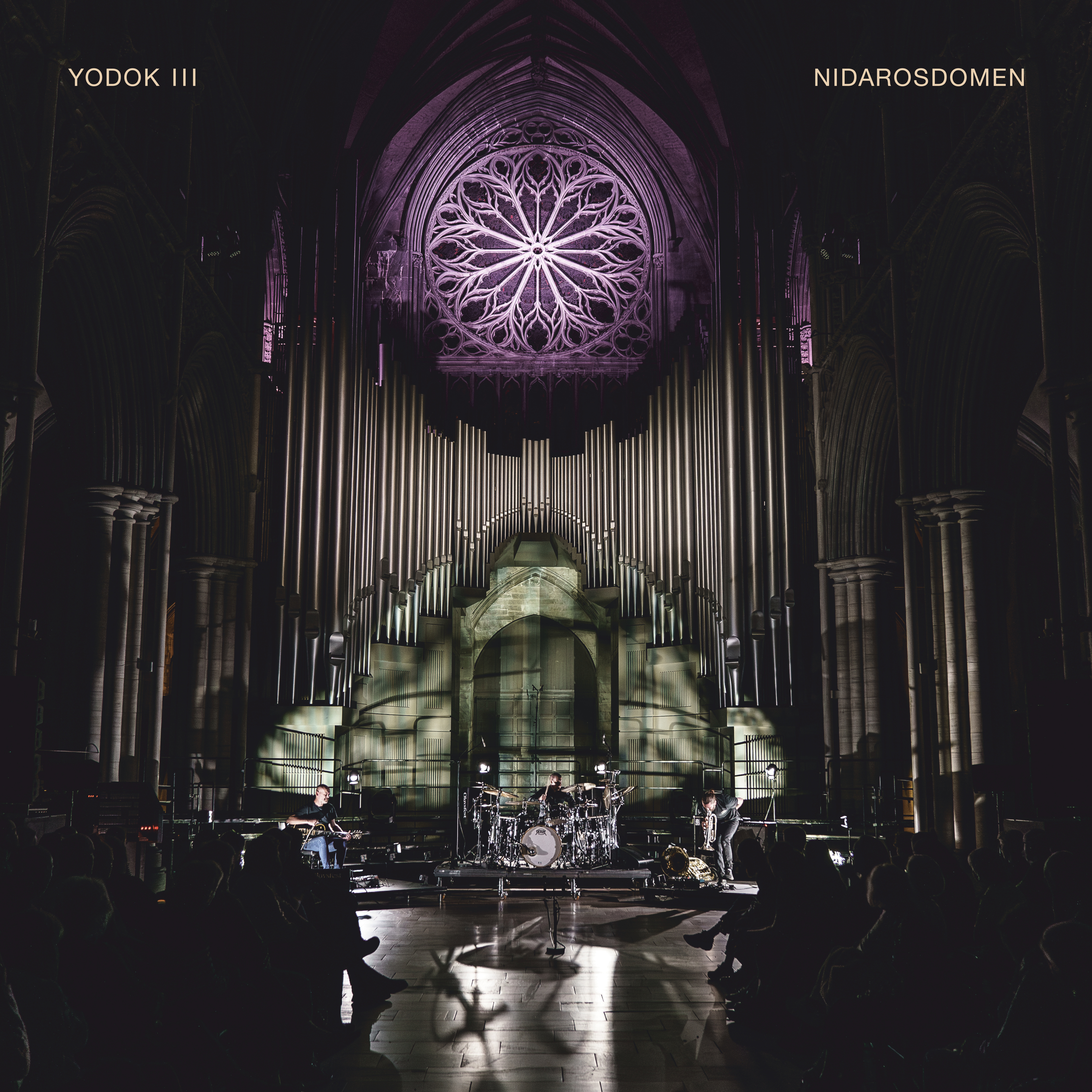
The best way to find Dirk is at his website: https://dirkserries.com/. His music is on many platforms, including Spotify and Bandcamp. Many of his live performances are on YouTube. Dirk also has a new, magnificent release — “YODOK III – NIDAROSDOMEN.” It will be officially out on September 19 but pre-ordering is now available through Consouling Sounds. After September 19, copies will be sold on Bandcamp. Check out the album teaser on YouTube.
Dirk chose a few more excellent tracks for our talk that we didn’t have the time to play on the show. I’ve included them here for your listening pleasure.
“from his vast and impressive catalog it’s difficult to choice, but this piece is one of my absolute favorites as it resembles everything I got to know Steve for, when I met him personally becoming good friends and collaborators. This piece blends in just a pitch-perfect manner the esoteric and spacious character of his music with the tribal-infused phase in his oeuvre.“
The Origin of Artifacts — Steve Roach — Artifacts (1994)
M.B. 55 T.D. 56 — Maurizio Bianchi — The Plain Truth (1983)
Listen to our entire one-hour talk here. Start at 1:01:17.
Today it’s once again BANDCAMP FRIDAY. Not only can you still benefit from the fantastic offers we have over at A New Wave Of Jazz but also are we giving you a 50%discount on any physical/digital release on these bandcamp collections
use code : bcfridayseptember
TIP ! You can also use the discount code if you want to purchase the full digital catalogues.
Today it’s once again BANDCAMP FRIDAY. Not only can you still benefit from the fantastic offers we have over at A New Wave Of Jazz but also are we giving you a 50%discount on any physical/digital release on these bandcamp collections
use code : bcfridayseptember
TIP ! You can also use the discount code if you want to purchase the full digital catalogues.