
SOUNDFUME is an old label re-instated, dedicated to experimental, avant-garde, free and ambient work of DIRK SERRIES and affiliated ‘mail’ collaborations.
DIRK SERRIES‘ early experiments under his VIDNA OBMANA pseudonym date back to the highly innovative, prolific and alternative years of the cassette network. When industrial, experimental, noise and abstract music were at their creative peak. DIRK SERRIES’ short lived SOUNDFUME label was a cassette imprint dedicated to industrial and experimental music. However Dirk’s own rapid progression as a musician when he slowly transformed VIDNA OBMANA into the well-known ambient entity it became, the label completely missed its mark.
Dirk never gave up on the name, he really liked. 30 years later SOUNDFUME is here.
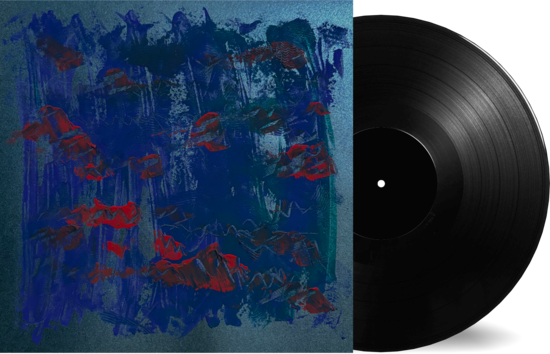
Each release is a professionally made lathe cut LP, limited to 25 hand numbered copies. Each copy comes with exclusive artwork by MARTINA VERHOEVEN, housed in a resealable deluxe polypro highly transparent sleeve. The release is enriched with a textured artisan paper insert with embossed stamp, a label card and sticker.
Some might ask themselved what’s a lathe cut ?
Well, a lathe cut is a physical vinyl product made on a stand-alone machine by carving grooves into a blank plastic or polycarbonate blank in real time. Unlike standard mass-produced vinyl records, which are stamped out by hydraulic presses from metal matrices, lathe cuts are produced one at a time and means a time-consuming labour of love. For its first release we’re working togethre with France’s MYSTUDIO who has a long career and reputation in lathe cut productions.
So from today in pre-order is its first release ! Official release date is September 15th.
ORDER YOUR COPY HERE :
——
DIRK SERRIES & PBK – AMPLITUDE SPLIT
(lathe cut LP, 25 copies black vinyl)
Before email, file sharing, and social media transformed how musicians connected, the international cassette underground functioned as its own creative ecosystem. Artists found one another through independent publications such as Option and Sound Choice, cassette labels, mail art, and handwritten correspondence. A review accompanied by a mailing address was often enough to spark an enduring artistic relationship.
It was through this network that Belgian composer Dirk Serries, then recording as Vidna Obmana, and American composer Phillip B. Klingler, recording as PBK, first came into contact. Their earliest documented correspondence dates from 1988, when Dirk invited PBK to contribute three compositions to the cassette compilation The Ambient Wax Ritual. That invitation quickly evolved into a collaboration, resulting in two full-length works, Monument of Empty Colours and Depression and Ideal. Originally released on cassette in 1989, these recordings explored slowly evolving drones, looping harmonic structures, and immersive sonic environments whose dense, monolithic presence and deliberate pacing anticipated what would later become recognized as the dark ambient aesthetic. Reissued several times over the ensuing decades, the albums continue to be regarded as important early works whose artistic value extends well beyond their historical significance.
Although their artistic paths diverged over the following decades, both composers continued to develop highly individual musical languages while remaining committed to exploration and experimentation. More than three decades after their last collaboration, they reunited to create amplitude split. Rather than revisiting the sound of their earlier recordings, both artists allowed their independently evolved musical vocabularies to meet on entirely new ground.
From its opening moments, amplitude split draws the listener into a dense, continually shifting structure of sound. Resonant guitar, abstract electronics, drones, and transformed sonic textures merge into an electroacoustic environment in which individual sources gradually lose their identity, becoming part of an ever-changing sonic fabric. The music resists narrative and imagery, directing the listener instead toward the internal life of sound itself. Crackling electrical textures emerge, dissolve, and reappear in new forms, while subtle shifts in resonance and spatial depth continually reshape the listening experience. At times the music feels almost claustrophobic in its density, yet its fascination lies precisely in this relentless process of transformation. Rather than relying on melody or conventional song structures, the compositions reward sustained listening, revealing new relationships as they continually evolve.
When Dirk Serries and PBK first exchanged recordings, every new composition crossed the Atlantic by post, carried on cassette tapes accompanied by handwritten letters. Today those same sounds can be exchanged in seconds, yet the quiet faith that somewhere, on the other side of the Atlantic another artist was listening remains at the heart of their collaboration. Amplitude Split is the latest chapter in that enduring dialogue.
——
ORDER YOUR COPY HERE :
https://soundfume.bandcamp.com/album/amplitude-split
Every copy out of 25 features exclusive artwork by Martina Verhoeven.
DIRK SERRIES
Over the past four decades, Dirk Serries has continually reinvented his musical language through an extraordinarily prolific body of work, first as Vidna Obmana and later through projects such as Fear Falls Burning. While maintaining an extensive international discography, he increasingly embraced electroacoustic guitar and spontaneous performance, becoming a prominent figure within the European free music community through recordings, concert appearances, festival performances, and collaborations with many of its leading musicians, including Steve Roach, Asmus Tietchens, Bass Communion, and numerous others. SEE FULL BIO HERE.
PHILLIP B. KLINGLER (PBK)
Phillip B. Klingler, recording as PBK, is an American composer whose work spans noise, ambient music, drone, and experimental electronics. Emerging from the international cassette underground of the late 1980s, he has developed a body of work distinguished less by adherence to any particular genre than by a sustained exploration of abstraction through sound.
Before turning to music, Klingler studied art at Northern Michigan University and California State University, exhibiting his work in the Los Angeles area while participating in the international mail art movement. His interest in Abstract Expressionism and Surrealist automatism would prove fundamental to his later musical practice. Rather than approaching composition through melody or conventional structure, he became fascinated by sound’s ability to exist independently of recognizable reference, creating immersive environments in which gesture, texture, and transformation became primary compositional materials.
Beginning with homemade cassette releases, PBK quickly became one of the more distinctive voices in the emerging American experimental underground. Working initially with synthesizers, effects processing, and primitive sampling, he developed an uncompromising aesthetic built from repetitive low-bit sample structures, dense sound masses, slowly evolving drones, and fragmented electronic textures that resisted conventional musical form. Reviewers struggled to categorize the work, describing it as everything from “assault ambient” to “post-apocalypse ambient atmospheres,” while others noted that it occupied a territory unlike either traditional industrial music or ambient composition.
Among PBK’s earliest collaborators was American tape artist Minóy. His singular approach to sound left a lasting impression on PBK’s early artistic development, while their short but prolific partnership brought PBK’s work to wider attention within the international cassette underground. Not long afterward, PBK began working with Belgian composer Dirk Serries, then recording as Vidna Obmana. Together they produced the now highly regarded ambient works: Monument of Empty Colours and Depression and Ideal. Reissued several times over the ensuing decades, these recordings are now widely regarded as important early contributions to what later became known as dark ambient music.
A period spent living in Puerto Rico during the 1990s marked a significant turning point in his artistic development. Working in relative isolation, Klingler began incorporating extreme MIDI sequencing, turntable manipulation, and unconventional digital processes into his compositions, producing recordings such as Listening to the World Vibrate and Life-Sense Revoked, in which fragmented sample architectures and asynchronous digital events established a highly personal compositional language that would later echo aspects of glitch aesthetics. Throughout this period, his work remained rooted in the same commitment to abstraction that had informed his earliest visual practice.
Collaboration has remained central to PBK’s artistic practice throughout his career. Alongside an extensive body of solo recordings, he has worked with an unusually diverse range of artists including Asmus Tietchens, Government Alpha, Howard Stelzer, Jim O’Rourke, Modelbau, Nocturnal Emissions, Richard Ramirez, Wolf Eyes, and many others. These collaborations rarely represent stylistic compromises; rather, they reveal PBK’s ability to adapt his distinctive sonic language within widely differing musical contexts.
His recordings have appeared on labels throughout North America, Europe, and Japan, while performances have taken him across the United States and Europe. Following Minóy’s death, Klingler acquired the artist’s archive and has since curated, remastered, and overseen the release of a substantial body of previously unheard and long-unavailable recordings, preserving an essential body of work from one of the U.S. cassette underground’s most distinctive voices.
In recent years Klingler has continued to expand his artistic practice through a steady stream of solo recordings and collaborations while remaining guided by the same commitment to sonic abstraction that has defined his work from the beginning. His ongoing Chain Letter Exhortation Series reflects a renewed engagement with the collaborative ethos of the international cassette underground, drawing inspiration from mail art, correspondence, and cassette culture while reimagining those ideas for the digital era. Rather than looking backward through nostalgia, the series proposes a contemporary model of artistic exchange, suggesting that the collaborative networks and creative principles of the cassette underground continue to offer possibilities for experimental music today.

